de
close
Zora Berweger

Greeting the Unseen

Kunsthalle

Intro

The oeuvre of Zora Berweger (*1981 in Bern, CH, lives and works in Leipzig, DE) includes painting, drawing, ceramics, installation, sculpture, photography and light. Her multimedia works draw on a vocabulary of basic geometric shapes, archaic-looking objects and design borrowed from nature.  

Using minimal means and carefully chosen materials, Berweger stages her works as spatial installations. She first examines the exhibition site closely as if it were a pictorial space and then experiments with scale, constellations and displacements while juxtaposing different media. Peculiar features of volumes, surfaces and materiality unite with the perception of light and colour to lend her works an altered presence.

Inspired by the spatial conditions at the Kunsthalle Appenzell, Berweger has oriented her work on the figure of a plant. She focuses here on functions, potentials and tasks of different plant parts to create combinations that invariably refer to something unseen or concealed. While the root system, anchored in the earth and thus largely hidden from view, serves as the artist’s substantive and formal starting point on the ground floor, she equates the central gallery with the core part of a plant, where nutrients are bundled and forces flow together. The uppermost space then holds manifestations of the plant within our own atmosphere as well as its connection to the greater cosmos.

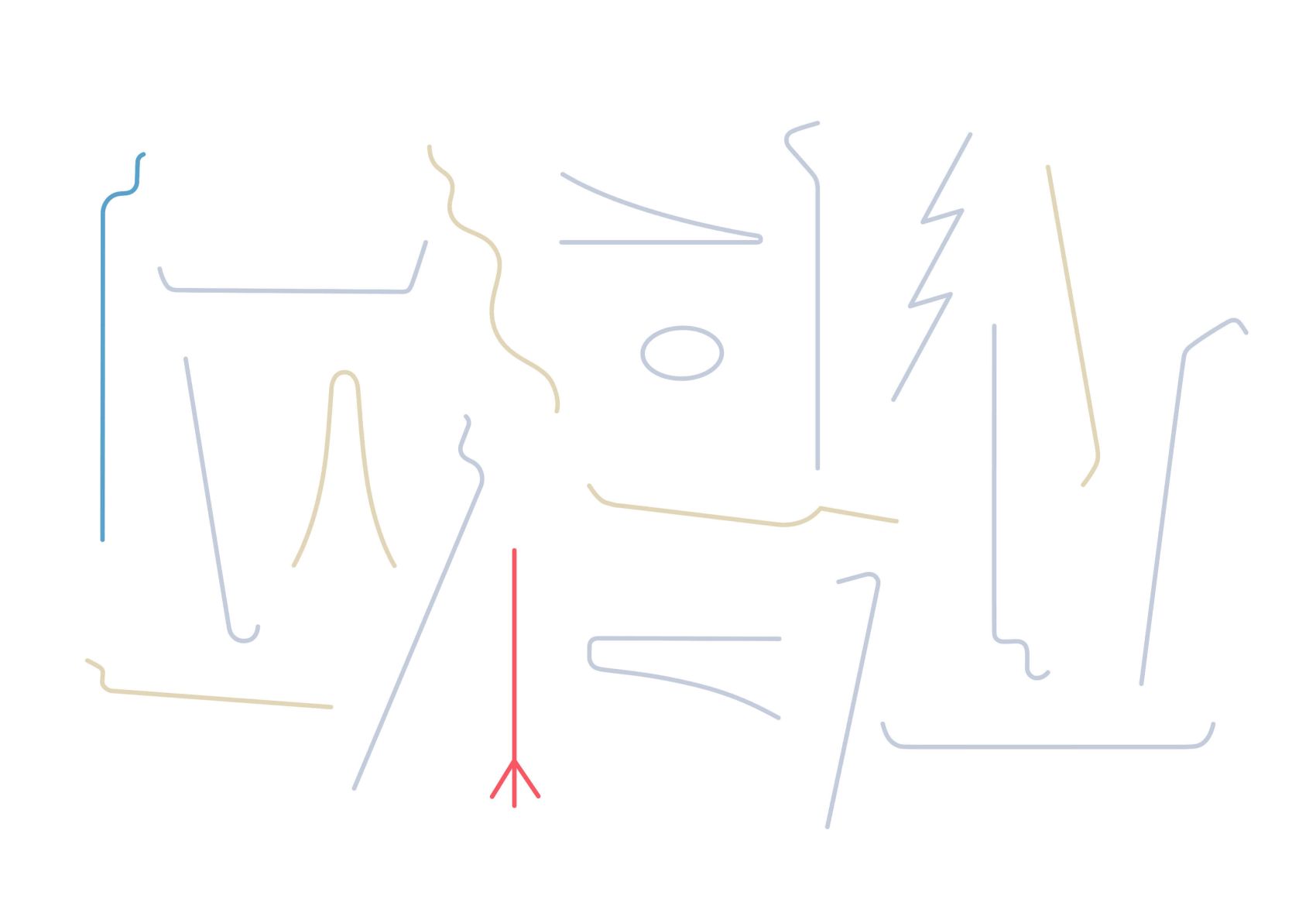
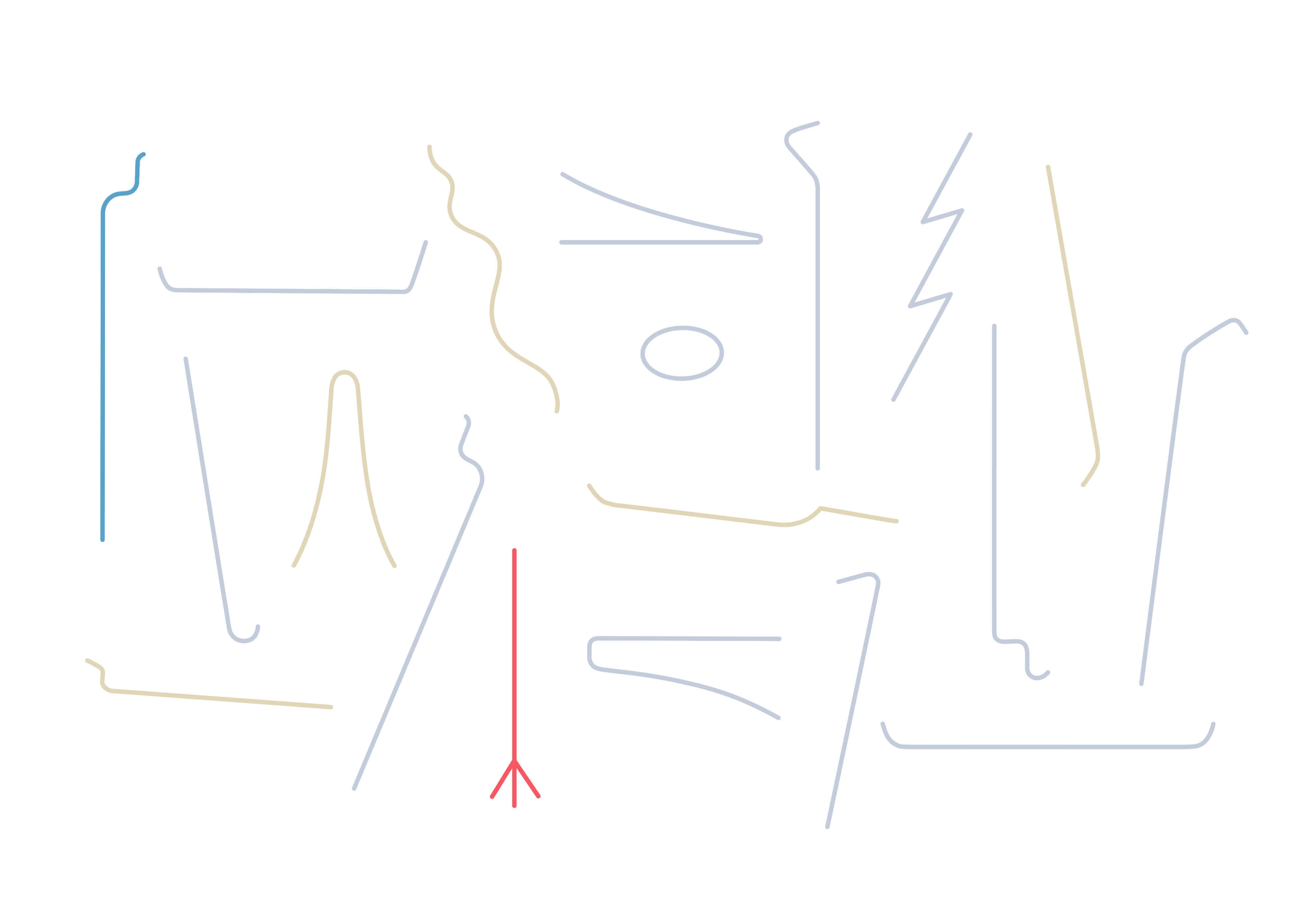
The single light signs of the neon installation Roots (2023), created especially for the exhibition, together form a kind of luminous root system. The neon bodies speak a reduced formal language and evoke multiple associations: they may recall typographic elements, written characters from past cultures, possibly hieroglyphics, symbols, antennae, tree branches or the simplest of tools. Roots refers to communication systems, for example those of plants, which are in contact with each other through their roots, not only exchanging information but also listening and hearing.
Room 1

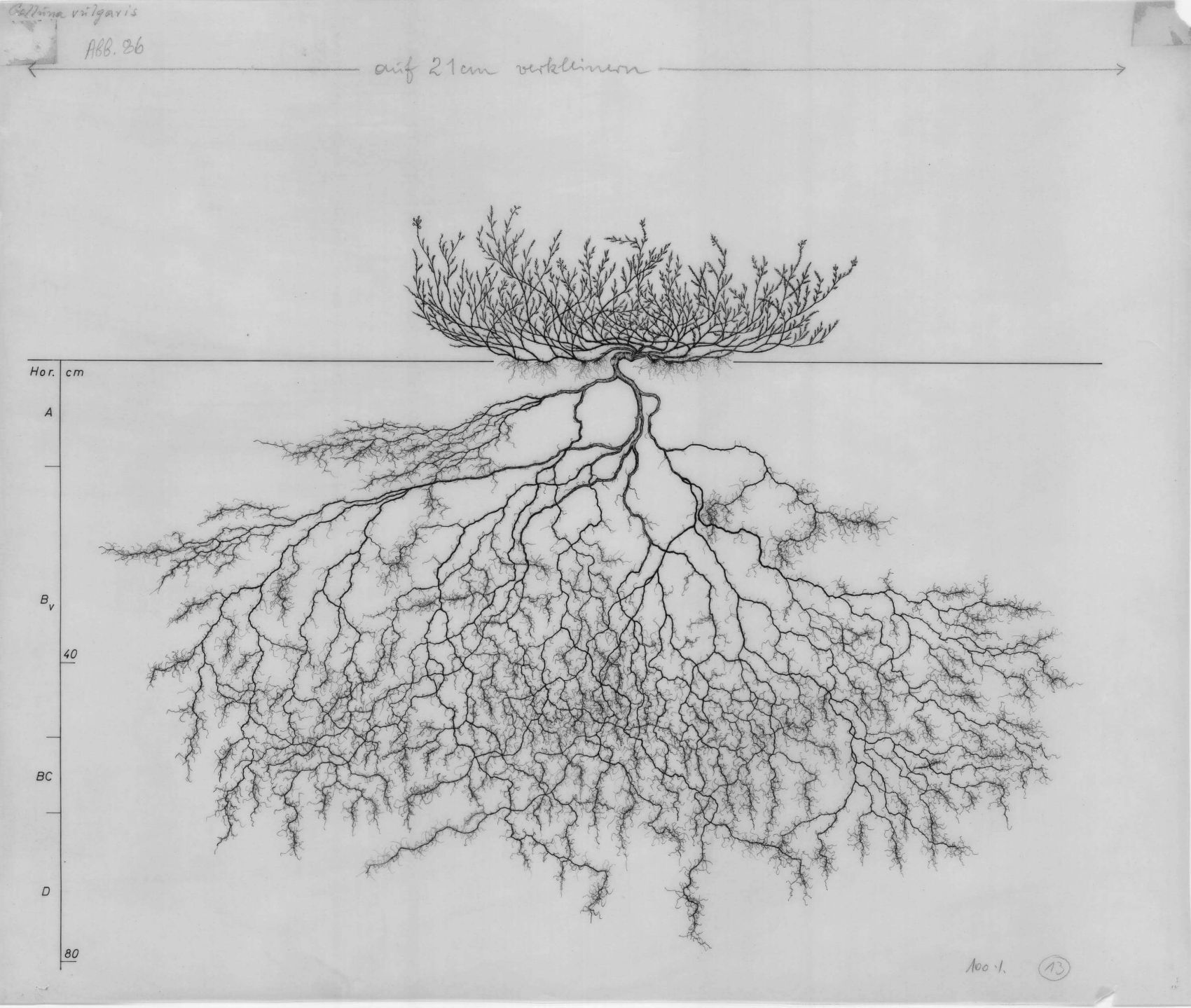
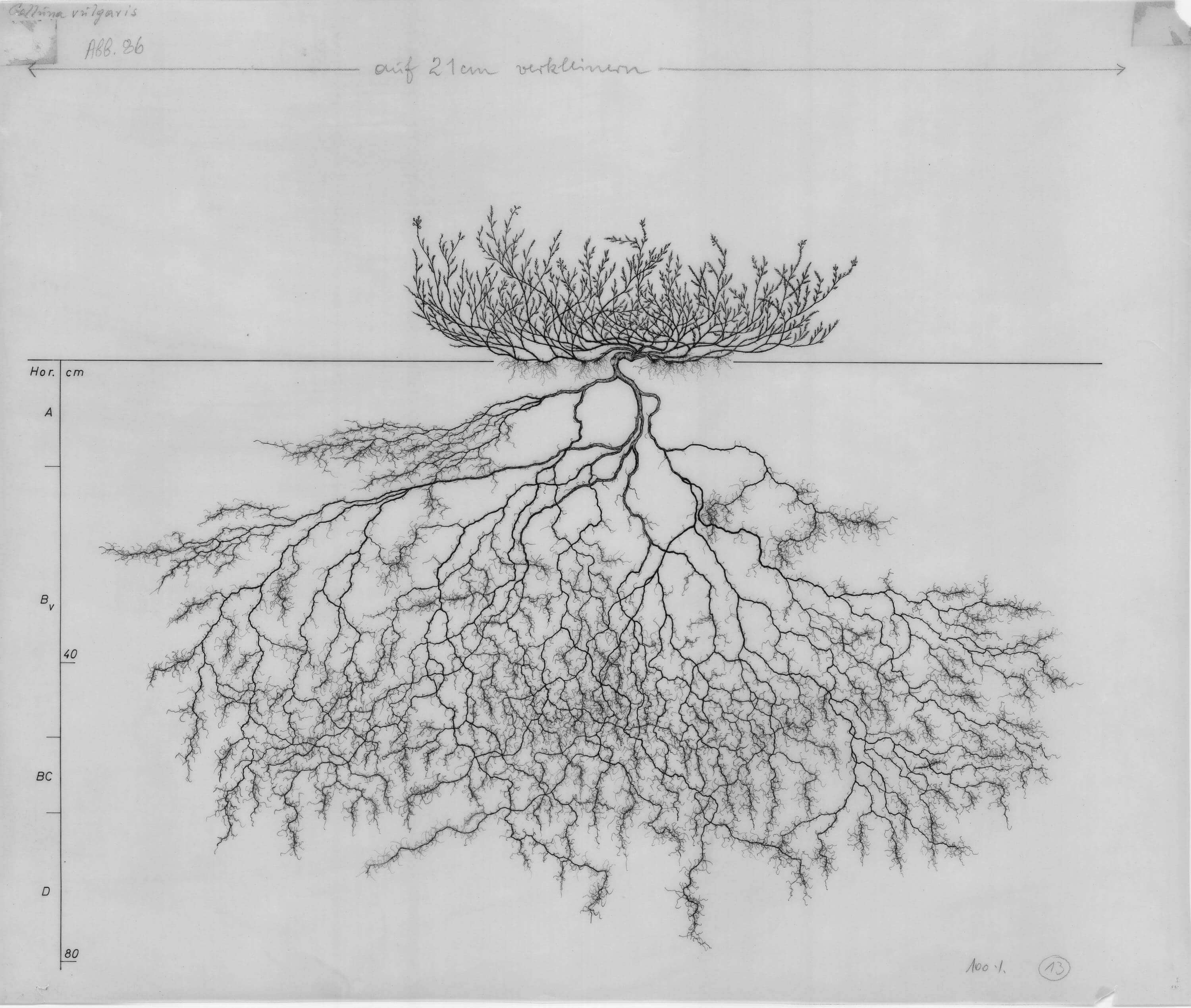
Calluna vulgarisKutschera, L., Lichtenegger, E., Wurzelatlas mitteleuropaeischer Gruenlandpflanzen, Volume  2 / 1: Pteridophyta und Dicotyledoneae, Stuttgart / Jena / New York, Gustav Fischer Verlag, 1992, p. 851

Calluna vulgaris
Kutschera, L., Lichtenegger, E., Wurzelatlas mitteleuropaeischer Gruenlandpflanzen, Volume  2 / 1: Pteridophyta und Dicotyledoneae, Stuttgart / Jena / New York, Gustav Fischer Verlag, 1992, p. 851

SG In the exhibition Greeting the Unseen, you create a conceptual reference to a growing plant. How do your work and the exhibition relate to this image?

ZB A few years ago, through a friend, I came across a digital archive of old drawings of root systems. I was instantly fascinated and moved by it. The fact that the largest part of a plant often remains hidden from our eyes, and the beauty that is revealed once you can perceive the entire (physical) nature of a plant, is made evident by these drawings. At the same time, they render perceptible the interplay between these areas, between these polar zones – which one might call for example visible versus hidden, light versus dark, upward- versus downward-striving, etc. 
When I received the invitation to do this exhibition and had a look at the galleries, these drawings of root systems unexpectedly came to mind. They overlapped with the impressions of the Kunsthalle’s architecture, the three superimposed rooms. 

SG What meaning does the exhibition title Greeting the Unseen have
for you?

ZB The title expresses an inner attitude from which my works spring – and probably many other things in my life as well. It is this interest, or joy, in looking behind things, calling out into the depths or vastness and perceiving and listening to what is there with all the senses at my disposal. In this case, “Greeting” means solemnly aligning oneself with something, opening oneself up to it and listening. Because the greeting is usually returned. “The Unseen” refers just as much to the subtle material realms as it does to the simply unnoticed regions, to that which is hidden or physically inaccessible to us. 

Sketch of the light signs of Roots (2023)

Sketch of the light signs of Roots (2023)

SG A central work that marks the beginning of the exhibition is Roots (2023). How did the neon installation come about?

ZB The starting point was the exhibition space itself and the vision of dedicating this space to the root system and to the realms within the earth. The idea of doing a neon installation came to me in such a flash that I can hardly explain it. It was all of a sudden just perfectly clear, both the medium and the gracefulness of the forms. Then the process of implementation began, including – in addition to all the technical considerations – drawing, selecting and coordinating the individual contours. The medium of light makes a lot of sense to me here. For example, the motion of greeting also carries light within; it is like sending out a beam of light. Then again, as I listen to the answers, multiple lights emerge from the earth, such as the mineral kingdom throwing sparks back at me. Communication in and of itself could also be considered an exchange of light.

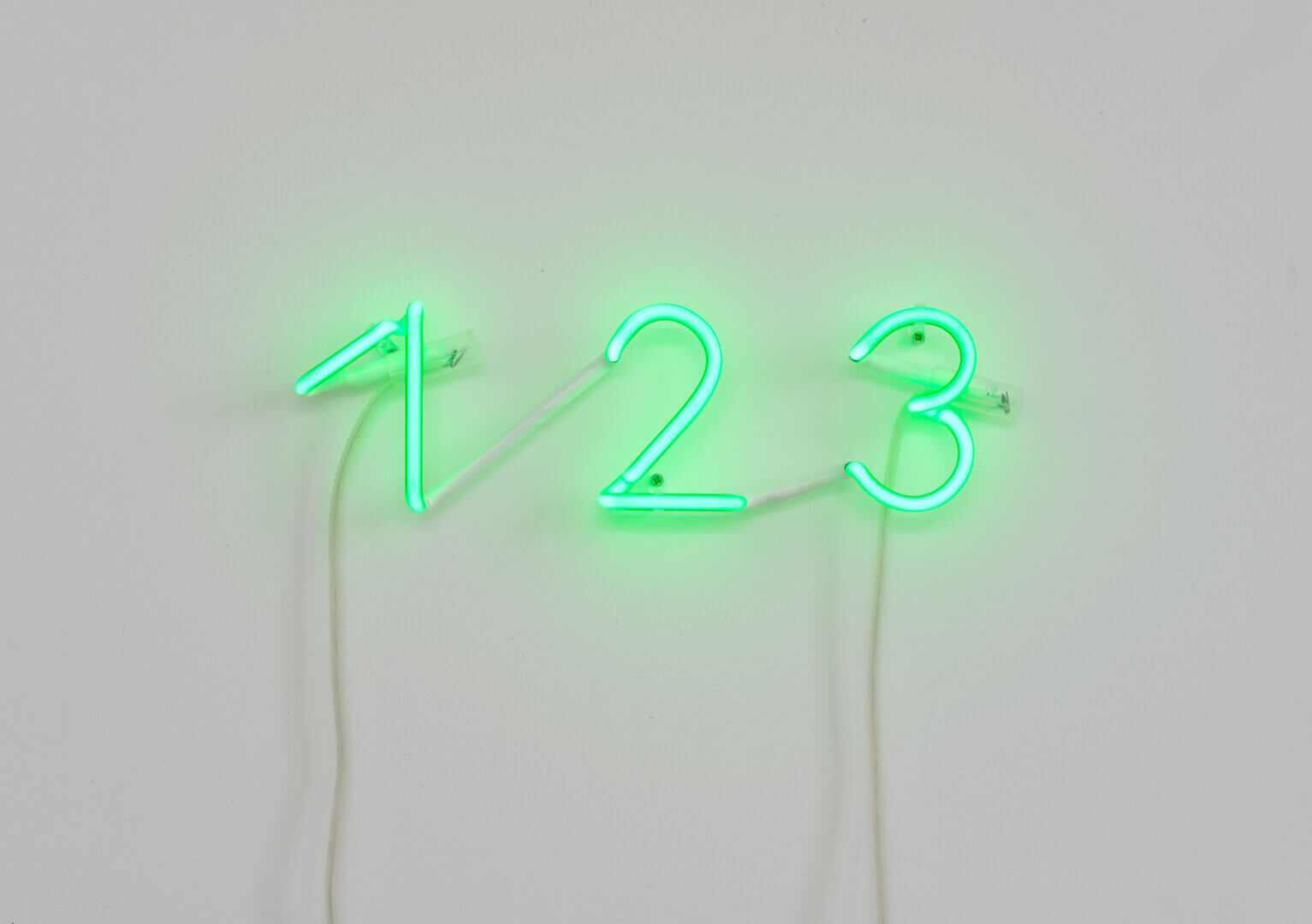
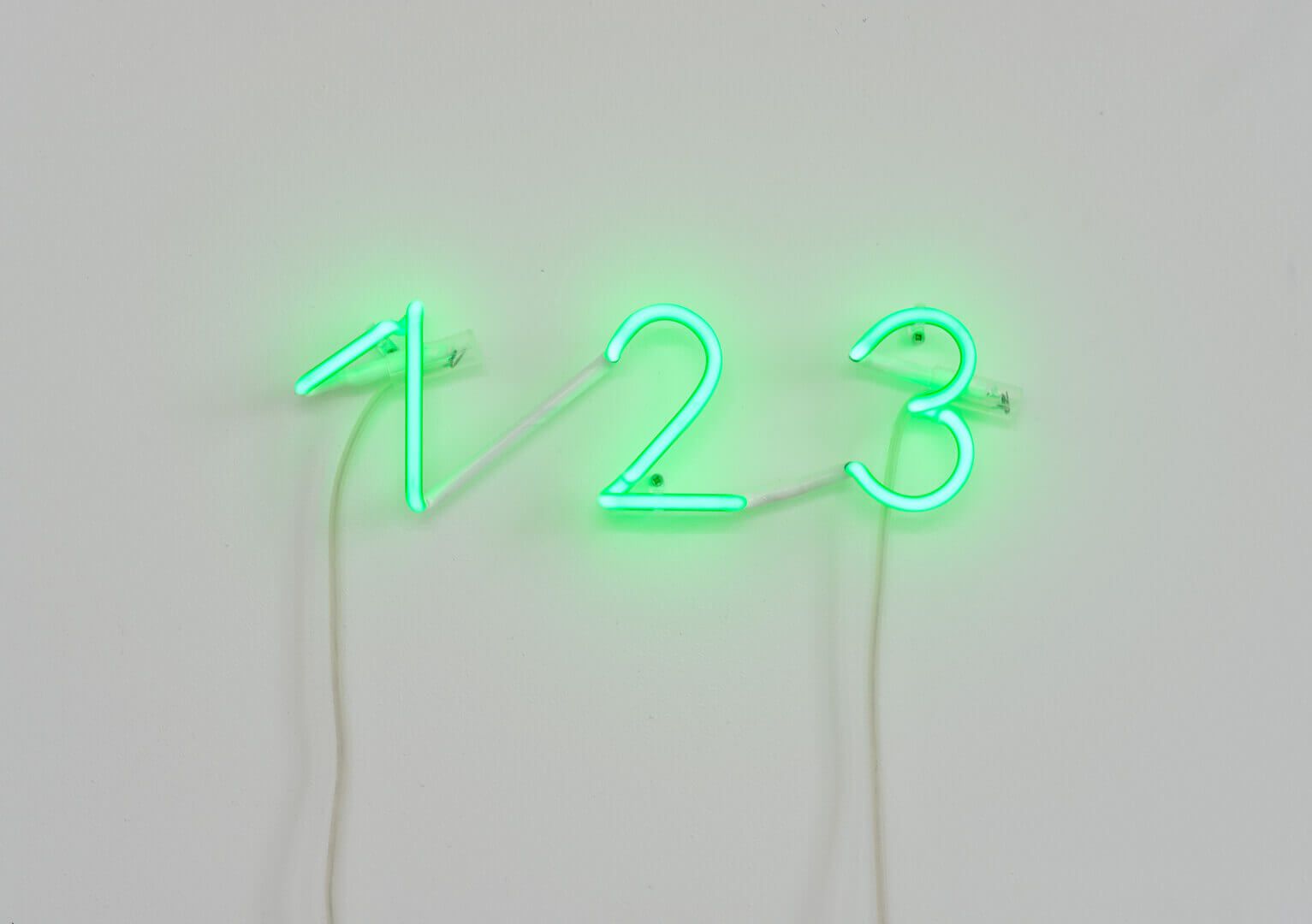
ohne Titel (evolve), 2019Neon, Edition 3 + 1AP / courtesy the artist / photo: Zora Berweger

ohne Titel (evolve), 2019
Neon, Edition 3 + 1AP / courtesy the artist / photo: Zora Berweger

SG Light is a material that recurs again and again in your practice. How does working with light differ from working with other materials?

ZB On the one hand, the actual materials play a role – glass, cables, transformers. Neon light brings something industrial, smooth, cool, technical into play. I find that to be a beneficial and important addition or extension to my work. This is also the case with the design, which is conditioned by the medium: the clarity of lines, their emblematic effect. The fact that I commission the fabrication externally also makes a big difference to me. 
And then there is the light itself, the effect of the medium, which in turn has an almost contrary impact to what has just been described. It has an expansive effect, is immaterial in nature. It transcends the boundaries of surface and space, form and formlessness. Seen from this perspective, it takes on an enormously unifying role in several respects. At the same time, it can also be perceived as other-worldly, disconnected from reality. There is something exciting about this oscillation. I also find light exciting in terms of colour, because it makes colour visible to our physical eyes in a way that can be experienced internally.

Room 2

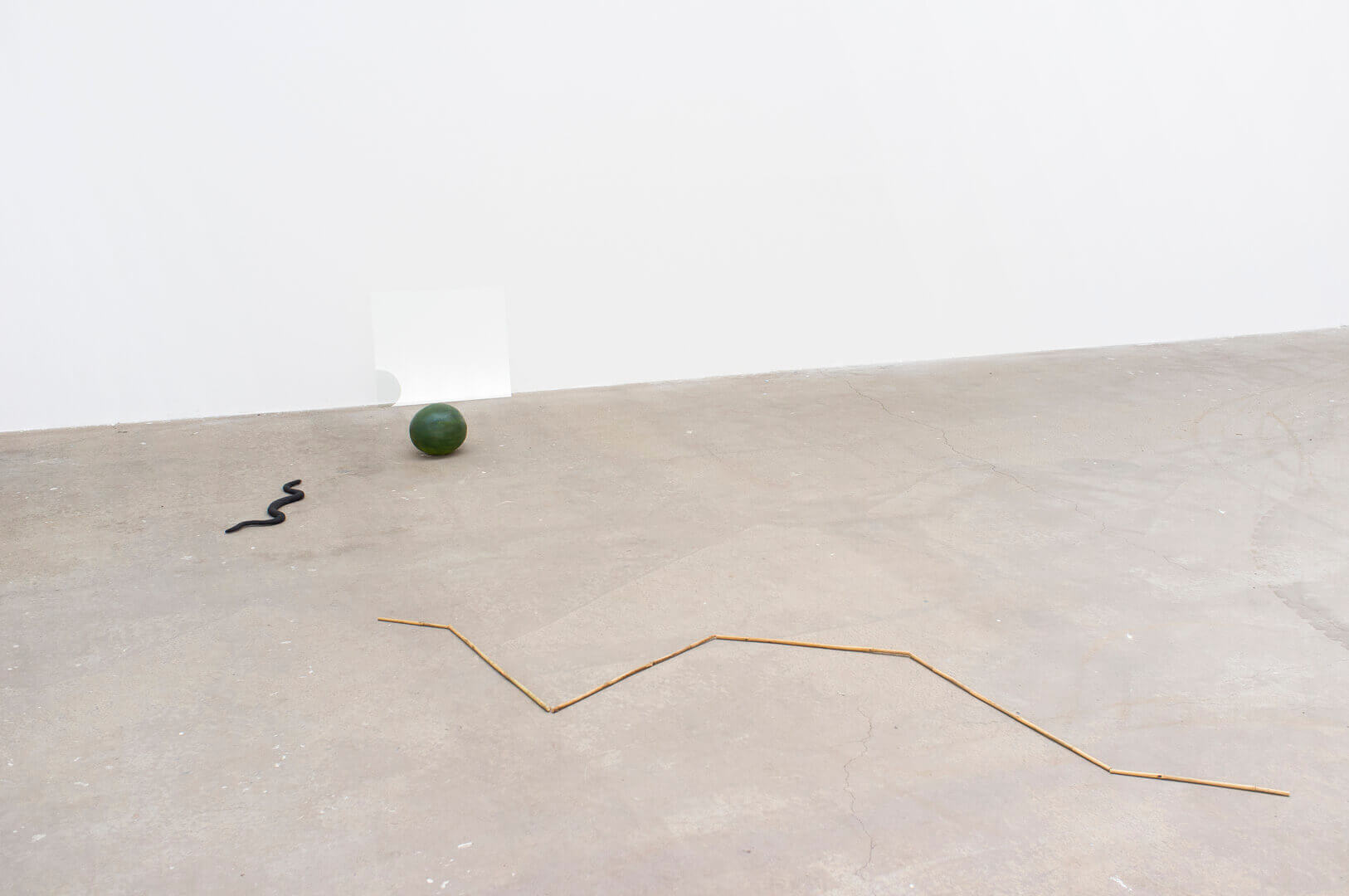
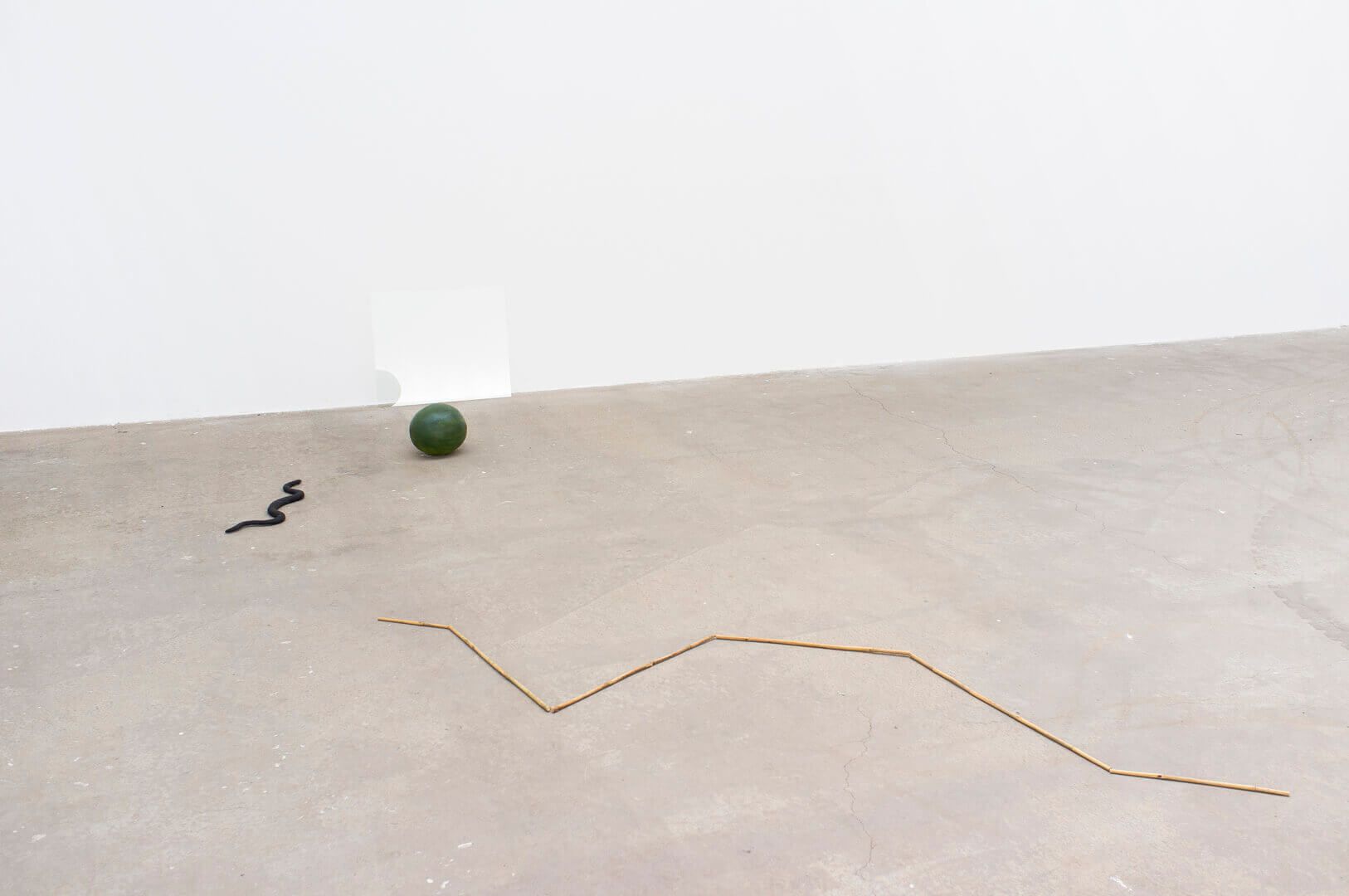
grounding, 2016Acrylic, bamboo sticks, plaster, glass, coconut fibre, oil, papier mâché, salt dough, impact metal, filling compound

grounding, 2016
Acrylic, bamboo sticks, plaster, glass, coconut fibre, oil, papier mâché, salt dough, impact metal, filling compound

SG The spaces in which you show your work are vital to your artistic exploration. What is your approach to a new exhibition project?

ZB Before I start a new exhibition project or even a new work, I always listen within. I ask myself questions about it and see what comes up. There are impulses I sense, they expand from within myself, guiding me and finally becoming form. In many cases, my mind’s eye already sees, for example, a specific sculpture or material, but sometimes it is more like an inner knowledge that guides me through the process of creation like a scent. And at other times something pops up that I can always question later on in the process; a kind of companion. I find this a very efficient and yet free way to work. Because I feel very quickly and clearly where the focus lies, what the essence is, where things are going, but without controlling the actual creation of the work too much. So there is still a lot of room for meandering, in close exchange with colour, form and material – which is very important to me. 

SG You have a strong interest in materials and continue to learn new techniques, enabling you to produce pieces with materials you have not worked with before. How important is it for you to study the material and the execution technique? 

ZB I usually let myself be guided by an idea and then try to find the material and medium that comes closest to it. In this way, I often come across materials and methods that are new to me. This can be quite uncomfortable at times, because it puts me in the position of a total beginner. And yet this beginner’s cluelessness has great power. Sometimes it’s like a wind of freedom and experimentation is blowing. In this exhibition, my diverse works meet up; they resonate together in a way that can be experienced. I am particularly looking forward to that. 

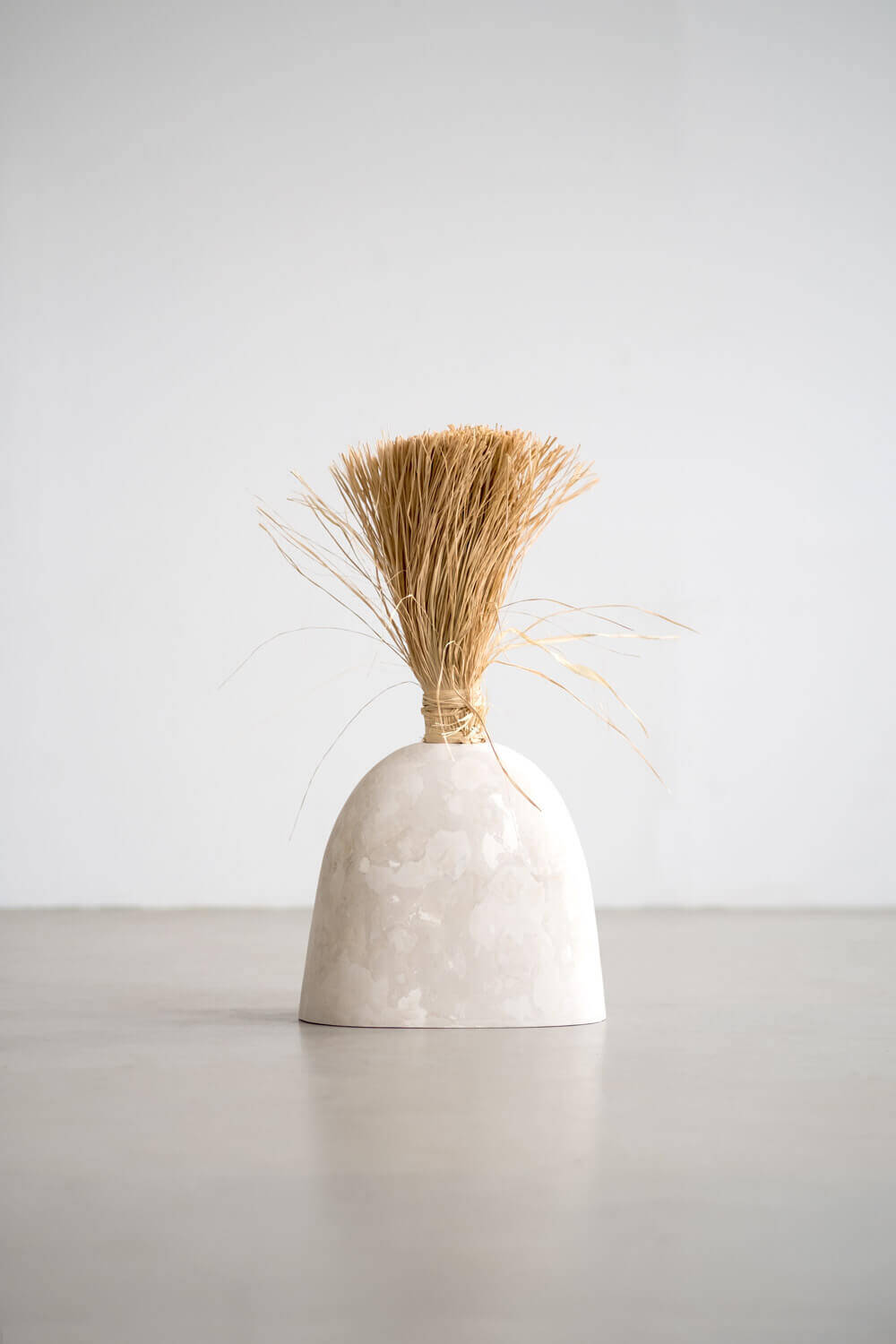
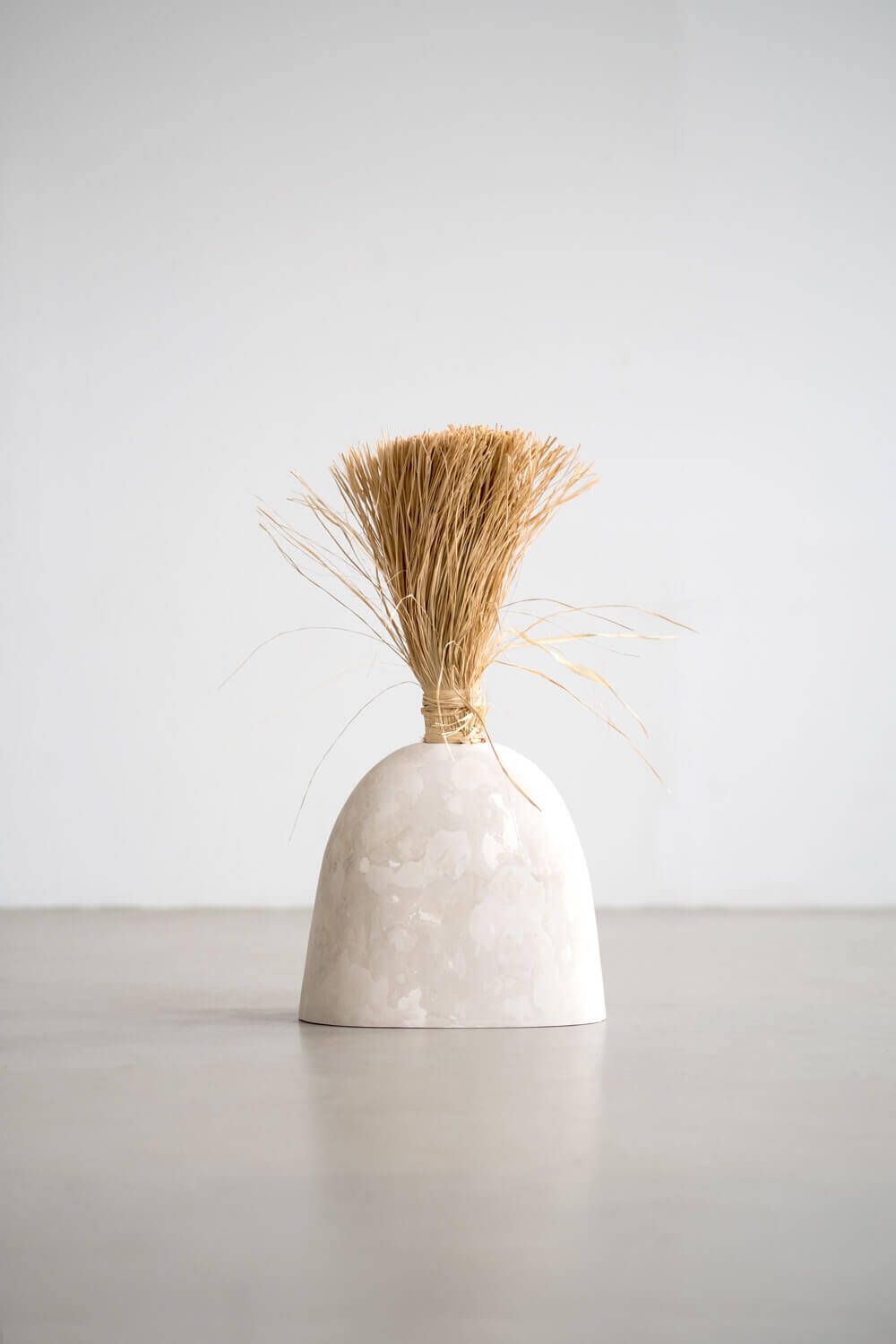
ohne Titel (green heart), 2019Bast, wire, plaster, pigment / courtesy the artist / photo: Zora Berweger

ohne Titel (green heart), 2019
Bast, wire, plaster, pigment / courtesy the artist / photo: Zora Berweger

SG What strikes me about your work is how you deal with fragmentation. We encounter individual, reduced elements that represent precise arrangements in space. What is your interest in the fragment?

ZB I think there are different appro-aches here. If you detach individual fragments and give them enough space, they can suddenly communicate in a way that is usually hardly possible for them, and the viewers have the opportunity to really listen to them. That’s what interests me. It is a love for their various outward appearances. When I contemplate spatial arrangements of fragments, it seems to me that the individual things are fully present and that their interplay, combined with the wandering gaze of the viewers, results in a subtle dance – like different lights that briefly flash in unison or succession or overlapping, fading out and then flashing again.

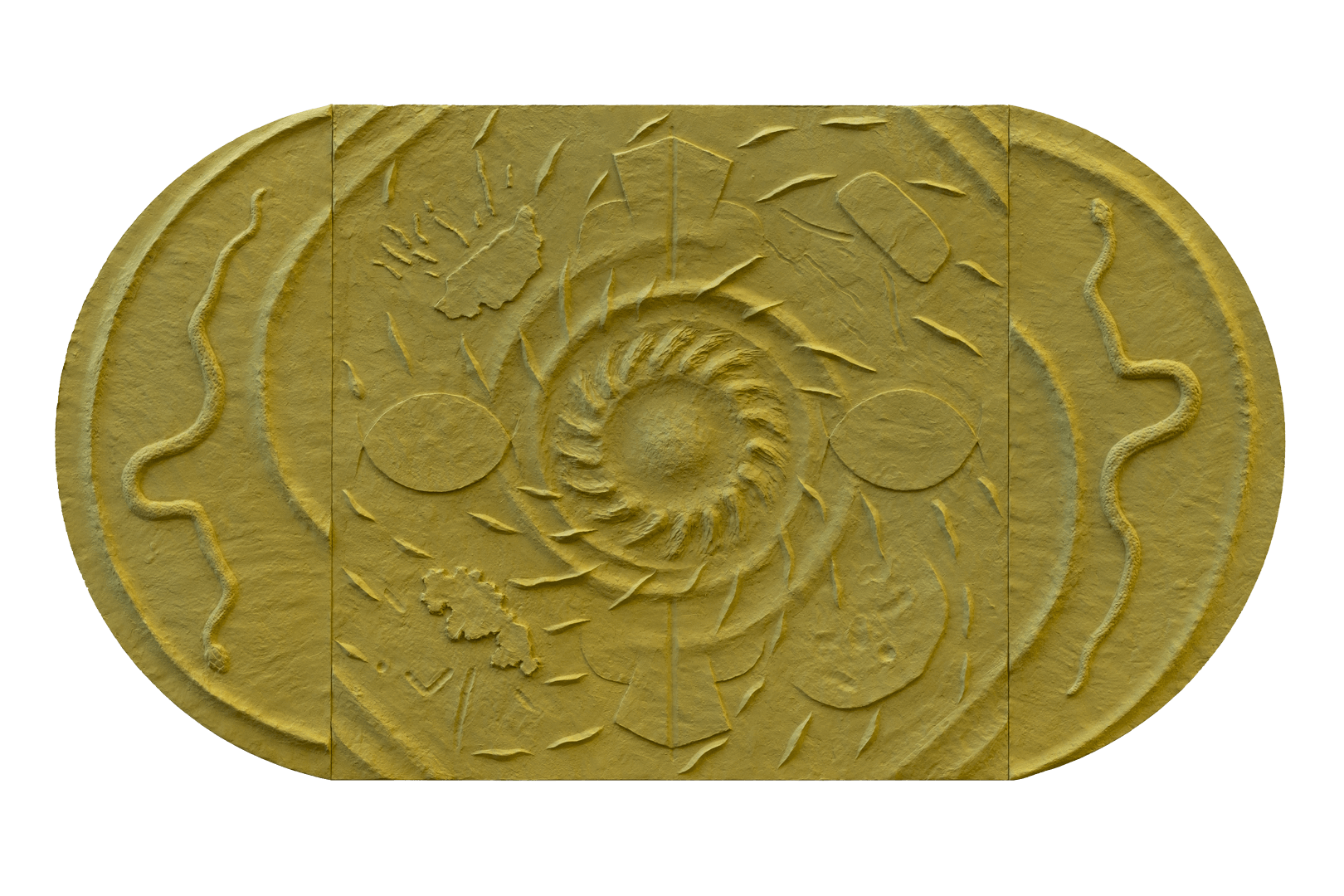
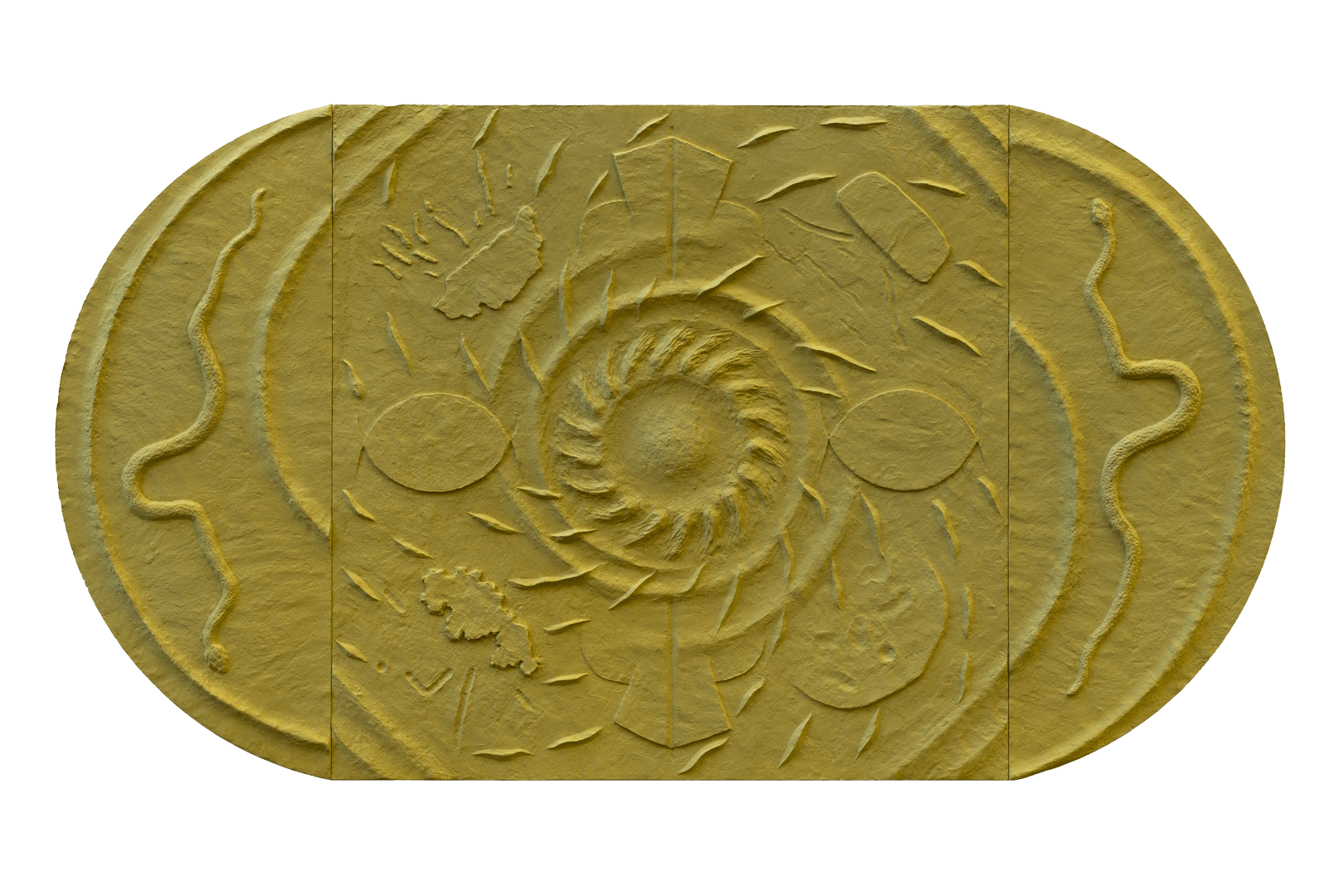
snake, transforming (8 trigrams), 2023Acrylic, papier mâché on aluminium dibond

snake, transforming (8 trigrams), 2023
Acrylic, papier mâché on aluminium dibond

SG You have produced two large reliefs for the exhibition: snake, transforming (8 trigrams) and wales, connecting (8 trigrams) (both 2023). They remind me of mysterious motifs, signs and images from extinct civilisations, such as the Inca, Maya and Aztecs. While in other works formal aspects stand out in relation to space, or phenomena of the world around us manifest themselves on the surfaces, here a symbolism can be discerned. How do you deal with sign systems in your work?

ZB I guess my approach is rather unconventional. For me, symbols and signs are not so very different from other forms. What interests me is to perceive the essence or the underlying force. I understand signs and symbols as an immediate expression of a certain piece of information, something that can be “read” – be it consciously or subconsciously. Of course, there are differences in terms of impact; not all signs are equally clear or bundled. Some bear the stamp of a particular culture, and how things are received also forms an important component. Nevertheless, symbols convey something universal and can thus be distinguished from individualised manifestations. I value this in my work because they emphasise the interconnectedness of all life. 

SG Next to the reliefs we see a new sculpture that looks like a hill. What creative and production processes were involved in this work? 

ZB Breathing, catalysing (2023) is a work, which is dedicated to the theme of the centre. In the plant image this corresponds to the tuber or the transition to the stem; in humans one could speak of the abdominal area or also the heart. It is the place of bundling, where everything flows together, where heaven and earth meet and polarities interact, and where the alchemy, the transformation takes place. I knew that I wanted to put something right in the centre of this middle space. Something that emphasises both the centre and the interior, this pool of fermentation. That was the basic impetus for this work.

SG What role does nature play in your art?

ZB It reveals itself in various aspects. On the one hand, I use nature to nourish and recharge myself. And then there is the feeling for me that my works do not exclusively address people but that they definitely also connect and communicate with the earth, minerals, the animal and plant kingdoms. In this sense, I also feel very connected to nature through making art and during the creative process. In nature I sense something primeval, something that does not strive to be anything, but simply is. This notion has a strong attraction for me. I like to think – even if we are conditioned differently – that we humans are part of nature.

Room 3

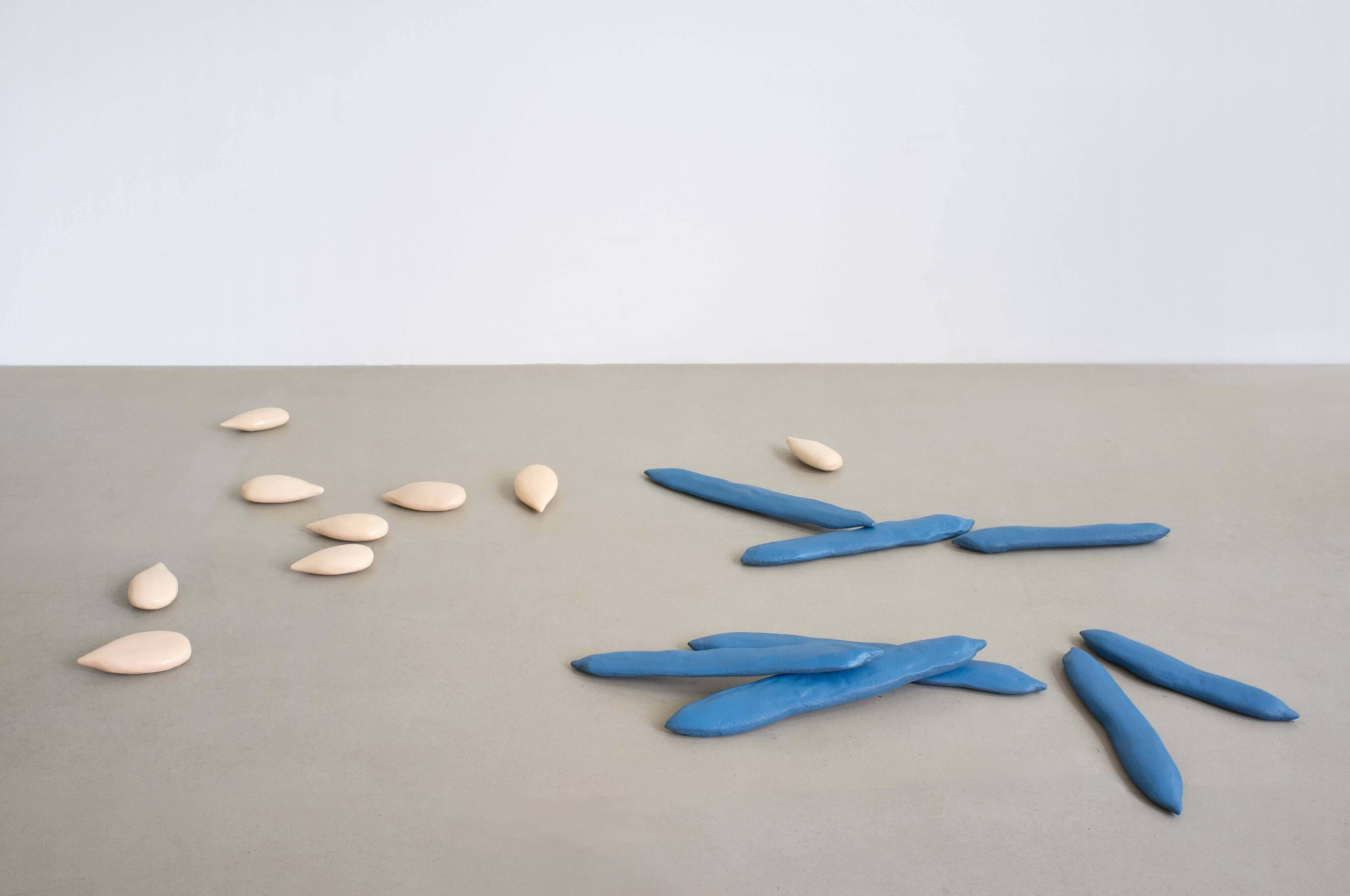
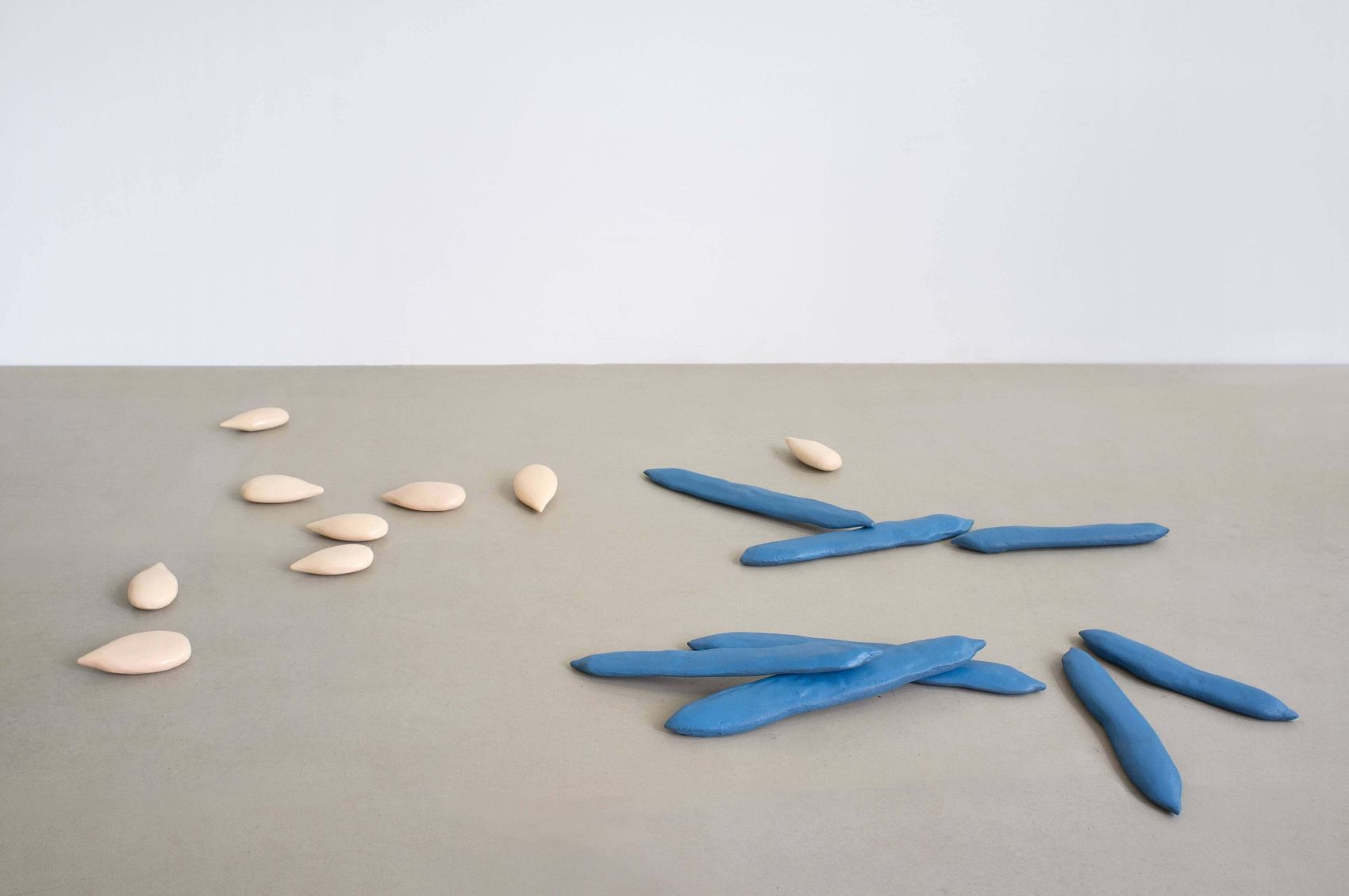
water bodies, 2021 Epoxy resin, plaster, rubber, styrofoam

water bodies, 2021
 Epoxy resin, plaster, rubber, styrofoam

SG In your work you create objects that refer to familiar things from the world around us and yet are reduced to symbols so that they remain distanced or intangible. I’m thinking here, for example, of water bodies (2021). What criteria affect your decision about which elements to bring together? 

ZB Something that fascinates me is the geometry that underlies all outward forms. For me, these very essential shapes, such as the straight line, the arc, the sphere, the triangle, the right angle, etc., exude a primal power that reminds me of the origin and also the cohesion of all life. At the same time, there is this incredible variety of appearances, each one highly specific. A donkey, for example, has a different air than a snail and makes a different impression. I’ve never really thought about it this way before, but I suppose I often bring things from the world all around us into my works that express both of these aspects.

SG The images in the series Cat’s Traces (2022) are so true to life as to be almost deceptive, looking like real spatial installations. What interests you about presenting spatial arrangements photographically?

ZB At best, I view my work, especially the installations, from a space of silence. Silence allows me to be open, free and empty and enables me to connect with things, to take them in. Often, however, the spatial, local conditions are not ideal for this – let alone my own internal state of mind. In addition, I have noticed that for some people it becomes even more difficult to find this place of silence as soon as their own body, and thus movement, enters into a relationship with a work of art. That’s how I became interested in staged photography. I was curious to see what photography could do in terms of silence. Because photography is capable of carrying space within itself, in a frozen or rigidly defined way. The observer’s perspective is also predetermined. So these are specific conditions inherent to the medium of photography that make it possible to gaze into this silent space. It is possible that viewers will be attracted by this space, drawn into it – or that the silence will extend into the physical space. 

SG As you have said, an exhibition viewing is not only determined by matter and space but also by the viewer’s own body in relation to the elements. How important is the human body to you? 

ZB The human body is important to me in many respects. On the one hand, it can be understood as solid matter, just like a painting, a sculpture, a plant, the planet Earth, like all the rough manifestations of material. It is just as manifest in form, colour, texture. I find it exciting to perceive with and through the body what a work of art can bring forth. In particular in my installations, I think that the relation to the body is elementary and easily accessible. The body is addressed directly, not necessarily as a fellow player, and is invited to follow the game and its effects up close.

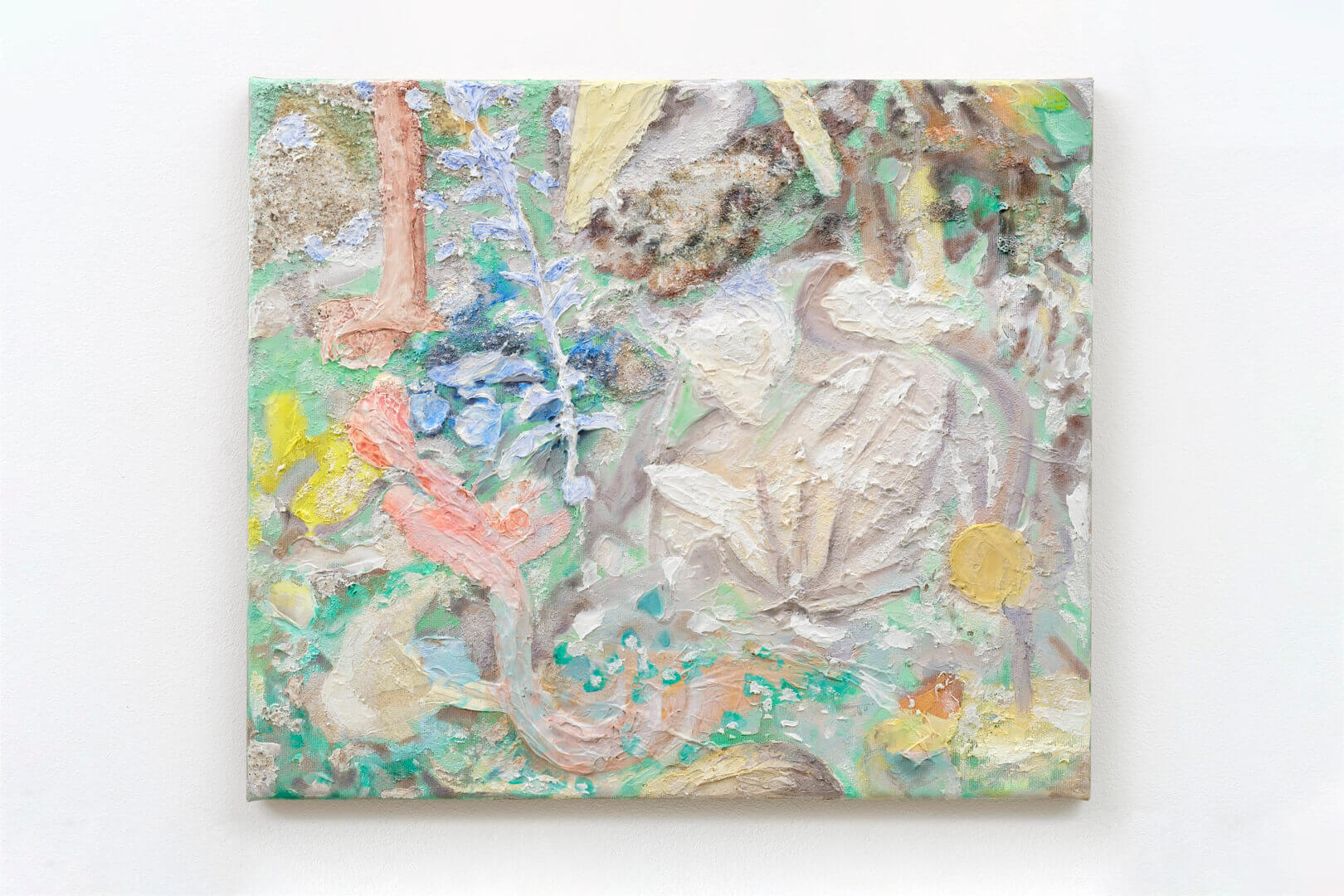
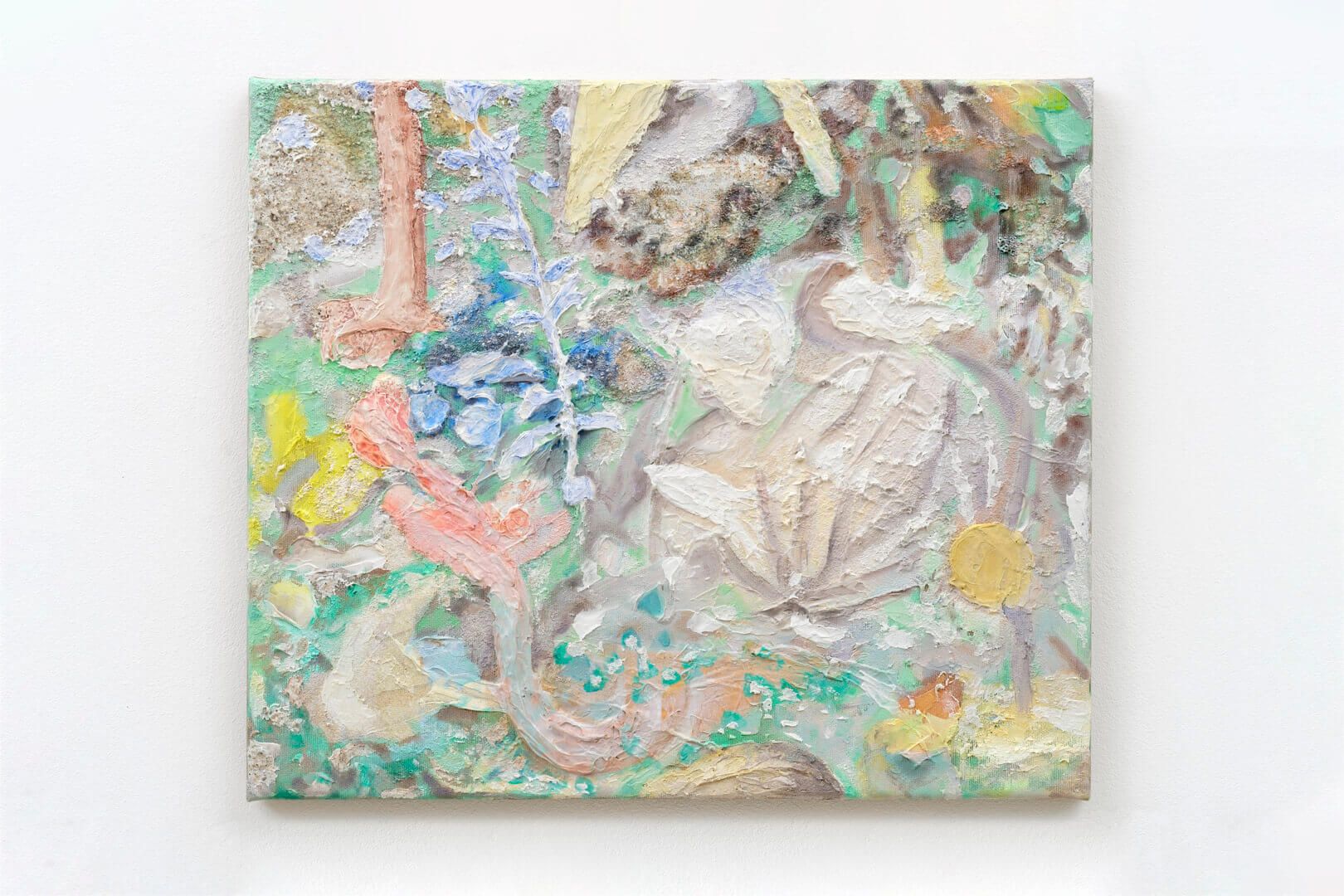
ohne Titel (nature), 2023Oil, sand, filler on canvas / courtesy the artist / photo: Zora Berweger

ohne Titel (nature), 2023
Oil, sand, filler on canvas / courtesy the artist / photo: Zora Berweger

SG You originally made paintings but have since worked in a variety of media. What role does painting still play in your work?

ZB If I only knew! Well, I suspect that in future I will increasingly find my way back to painting. In recent years, I’ve felt less free with painting than in three-dimensional media – which was due to the process of creation. Still, I sat down every now and then to paint several small canvases, and I finished one of them this year. To me, an important way of accessing painting is definitely through colour, and I have fortunately not lost this. It’s also interesting to see that the fragmentary can be found in my paintings just as in my other works, but it seems to work/function differently there somehow. It seems to me that the individual fragments there form a kind of spatial field.

SG During the exhibition period you will offer three guided medita-tions – one on each floor. What can visitors expect?

ZB I would like to use the exhibition, the interplay between the works in these spaces, as well as the themes of the individual floors – basically the entire atmosphere created by this exhibition – to invite visitors to embark on inner journeys into realms that mostly go unseen and are difficult for our physical bodies to access.

Bio

Zora Berweger (*1981 in Bern, lives and works in Leipzig, DE) is a Bernese artist with roots in the Canton of Appenzell. She trained as a theatre painter and then studied textile design at the Lucerne School of Art and Design before moving to Leipzig in 2006 to work as a freelance artist.

Berweger has had numerous solo or double exhibitions in Europe. In 2022, the artist was awarded the “Neustart Kultur” scholarship from the Stiftung Kunstfonds; in 2021, a working scholarship from the City of Leipzig; and in 2020 and 2013, a work grant from the Ausserrhodische Kulturstiftung.

next exhibition

Impressum

CURATOR
Stefanie Gschwend

TEAM
Anna Beck-Wörner, Regina Brülisauer, Stefanie Gschwend, Christian Hörler, Christian Meier, Claudia Reeb,
Madleina Rutishauser

EXHIBITION INSTALLATION
Christian Hörler, Christian Meier mit Ueli Alder, Roswitha Gobbo, Dominik Hull, Carina Kirsch, Niklaus Ulmann

MUSEUM ATTENDANTS
Raphaela Böhi, Dominique Franke, Margrit Gmünder, Roswitha Gobbo, Margrit Küng, Barbara Metzger, Cristina Mosti, Madleina Rutishauser, Melanie Scherrer

TEXT
Stefanie Gschwend

PROOFREADING
Michaela Alex-Eibensteiner

TRANSLATION
Katja Naumann

COURTESY
Courtesy the artist
Photos: Zora Berweger

GRAPHIC DESIGN
Data-Orbit / Michel Egger, St.Gallen

ACKNOWLEDGEMENTS
Zora Berweger, Liz Craft, Paul-Aymar Morgue d’Algue, Paul Bernard, Laura Weber, Team Kunsthaus Pasquart / Centre dʼédition contemporaine, Genf, Fonds cantonal dʼart contemporain, Geneva, Galerie Loevenbruck, Paris, MAMCO, Geneva, Swana Mourgue dʼAlgue, Neue alte Brücke, Frankfurt, Sébastien Peyret, FR,
Anne Shelton Aaron and lenders who wish to remain anonymous

ZORA BERWEGER – GREETING THE UNSEEN WAS KINDLY SUPPORTED BY
Stiftung Erna und Curt Burgauer

Zora Berweger
Greeting the Unseen
Kunsthalle
Calluna vulgarisKutschera, L., Lichtenegger, E., Wurzelatlas mitteleuropaeischer Gruenlandpflanzen, Volume  2 / 1: Pteridophyta und Dicotyledoneae, Stuttgart / Jena / New York, Gustav Fischer Verlag, 1992, p. 851

Calluna vulgaris
Kutschera, L., Lichtenegger, E., Wurzelatlas mitteleuropaeischer Gruenlandpflanzen, Volume  2 / 1: Pteridophyta und Dicotyledoneae, Stuttgart / Jena / New York, Gustav Fischer Verlag, 1992, p. 851

Sketch of the light signs of Roots (2023)

Sketch of the light signs of Roots (2023)

ohne Titel (evolve), 2019Neon, Edition 3 + 1AP / courtesy the artist / photo: Zora Berweger

ohne Titel (evolve), 2019
Neon, Edition 3 + 1AP / courtesy the artist / photo: Zora Berweger

grounding, 2016Acrylic, bamboo sticks, plaster, glass, coconut fibre, oil, papier mâché, salt dough, impact metal, filling compound

grounding, 2016
Acrylic, bamboo sticks, plaster, glass, coconut fibre, oil, papier mâché, salt dough, impact metal, filling compound

ohne Titel (green heart), 2019Bast, wire, plaster, pigment / courtesy the artist / photo: Zora Berweger

ohne Titel (green heart), 2019
Bast, wire, plaster, pigment / courtesy the artist / photo: Zora Berweger

snake, transforming (8 trigrams), 2023Acrylic, papier mâché on aluminium dibond

snake, transforming (8 trigrams), 2023
Acrylic, papier mâché on aluminium dibond

water bodies, 2021 Epoxy resin, plaster, rubber, styrofoam

water bodies, 2021
 Epoxy resin, plaster, rubber, styrofoam

ohne Titel (nature), 2023Oil, sand, filler on canvas / courtesy the artist / photo: Zora Berweger

ohne Titel (nature), 2023
Oil, sand, filler on canvas / courtesy the artist / photo: Zora Berweger

This website uses cookies.

Privacy Policy /