de
close
Lieblingswerke

Collection

Kunstmuseum

Intro

The relationships we cultivate with works of art can touch us both personally and socially. Art stimulates thought and critical reflection, can serve as a repository for stories, as a mirror of society or of our own feelings and experiences, and helps us to connect with others. This exhibition is about the connections that exist between the works of art and the people who engage with them in their own way: be it in everyday interaction, at work or in more casual encounters. Selected individuals who are connected with the Heinrich Gebert Cultural Foundation's collection or who shape public life in Appenzell and the surrounding area through their social and cultural commitment are invited to choose a work from the collection. This lively selection forms the starting point for an exhibition of the collection and connects people directly with the works.

Works selected by:

Appenzellerland Tourismus, Asylzentrum AI, Regina Brülisauer, Bücherladen Appenzell, Sebastian Fässler, Myriam Gebert, Christian Hörler, Innerrhoder Kunststiftung, Kulturgruppe Appenzell, Simona Martinoli (Fondazione Marguerite Arp, Locarno), Christian Meier, Museum Appenzell, Standeskommission Appenzell Innerrhoden, Luca Tarelli

Room 1

Christian Hörler, Stolen an den Stiefeln (3), 2018

Christian Hörler, Stolen an den Stiefeln (3), 2018

The works unfold within a field of tension between the visible and the concealed, between nature and culture, material weight and abstraction. Christian Hörler’s sculpture in clay and wood recalls the archaic presence of the earth, while Zora Berweger’s composition invokes processes of breathing and transformation, pointing at once to the invisible, the intangible and the cosmic. Howard Smith’s small watercolour of coloured dots enters seamlessly into this dialogue: repeated brushstrokes condense into delicate chromatic traces that generate depth and variation. In spite of its modest format, the work achieves an intense chromatic balance and density – a fragmentary, almost unobtrusive accent which, in reducing itself to the smallest gesture, touches upon the universal.

Eduardo Chillida’s etchings function as thought models in which he tests questions of weight, space, tension and energy upon the surface. Condensed lines interlock into compact, almost corporeal centres from which a sense of energetic pull and thrust emanates. As in his sculpture, the concern is not the depiction of bodies but the rendering visible of invisible forces – a yearning that unfolds between fullness and void, presence and negative space. By contrast, Matias Spescha’s painting translates space into rigorous fields of colour that appear as cartographic fragments, suggesting an inner topography: condensed landscapes that do not depict but rather recall horizons, valleys and passages.

Jochen Stenschke’s works in waste oil, graphite and coloured pencil generate surfaces that oscillate between sign-like inscription and topographical legibility – akin to sedimented maps of a damaged world. The use of waste oil, a residue of industrial society, introduces an almost toxic aura, pointing to use, consumption and transience. In this material ecological concerns also resonate, echoing those in Alice Channer’s Rockpool (2023) – the interweaving of nature and industrial trace, of beauty and destruction.

FAVOURITE WORK:

Howard Smith, Untitled (2008)

SELECTION:

Christian Hörler, Artist and Collections & Exhibition Technician Kunstmuseum / Kunsthalle Appenzell

“The importance of the individual for the resonance of the whole.

My memory of the installation of Howard Smith’s exhibition no end in sight is one of the most beautiful. A wonderful human being. Since working on that exhibition, there have always been nuts, fruit and chocolate for the installation team. Howard took a deep interest in us and our well-being. From a text by Roland Scotti on Smith’s work, and from conversations with museum visitors, I take away today: ‘…it was and always is about value, about esteem, about the coexistence of the seemingly disparate…’ Thus Howard Smith’s works and his person merge into one and the same.”


Room 2

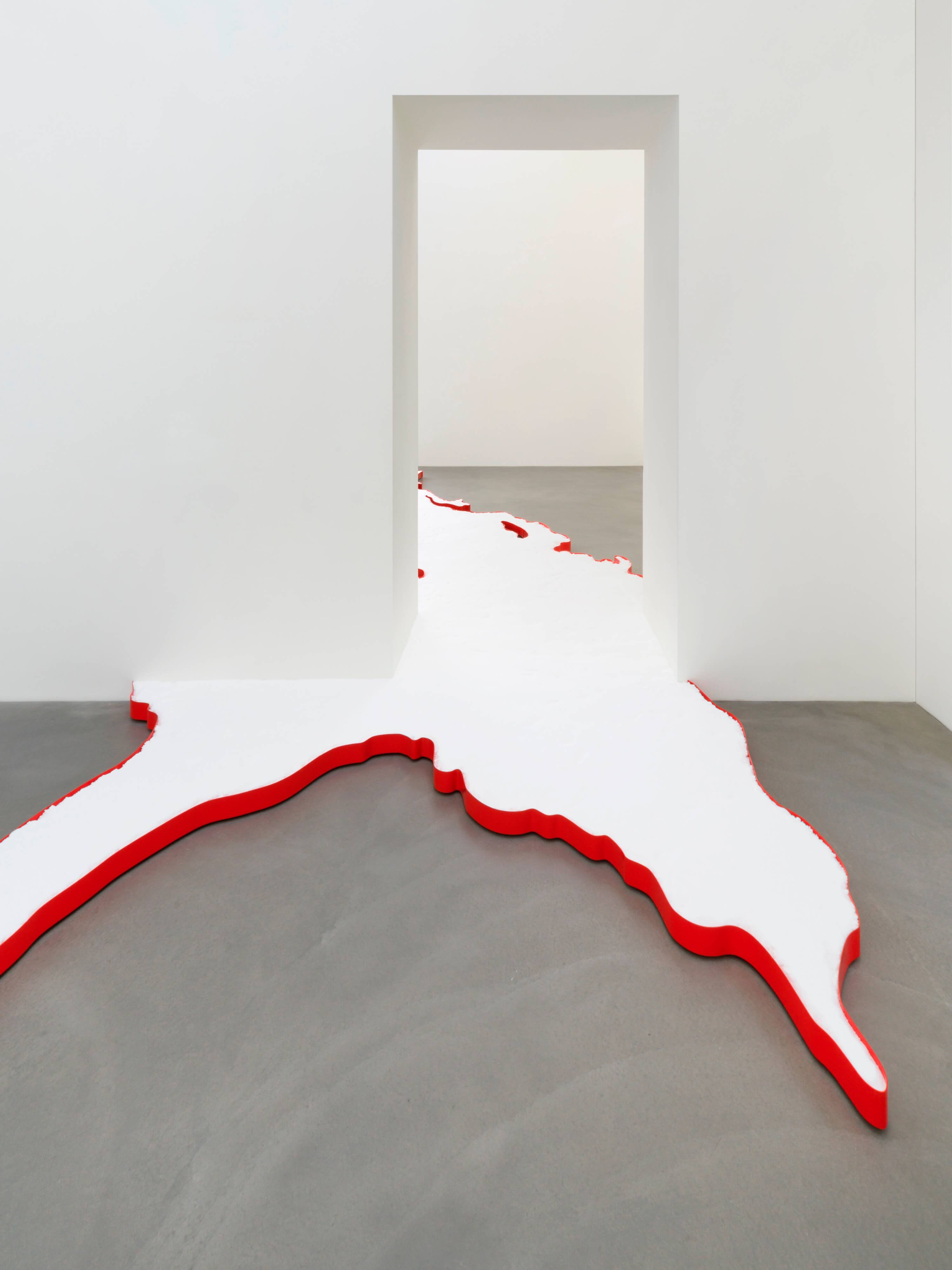
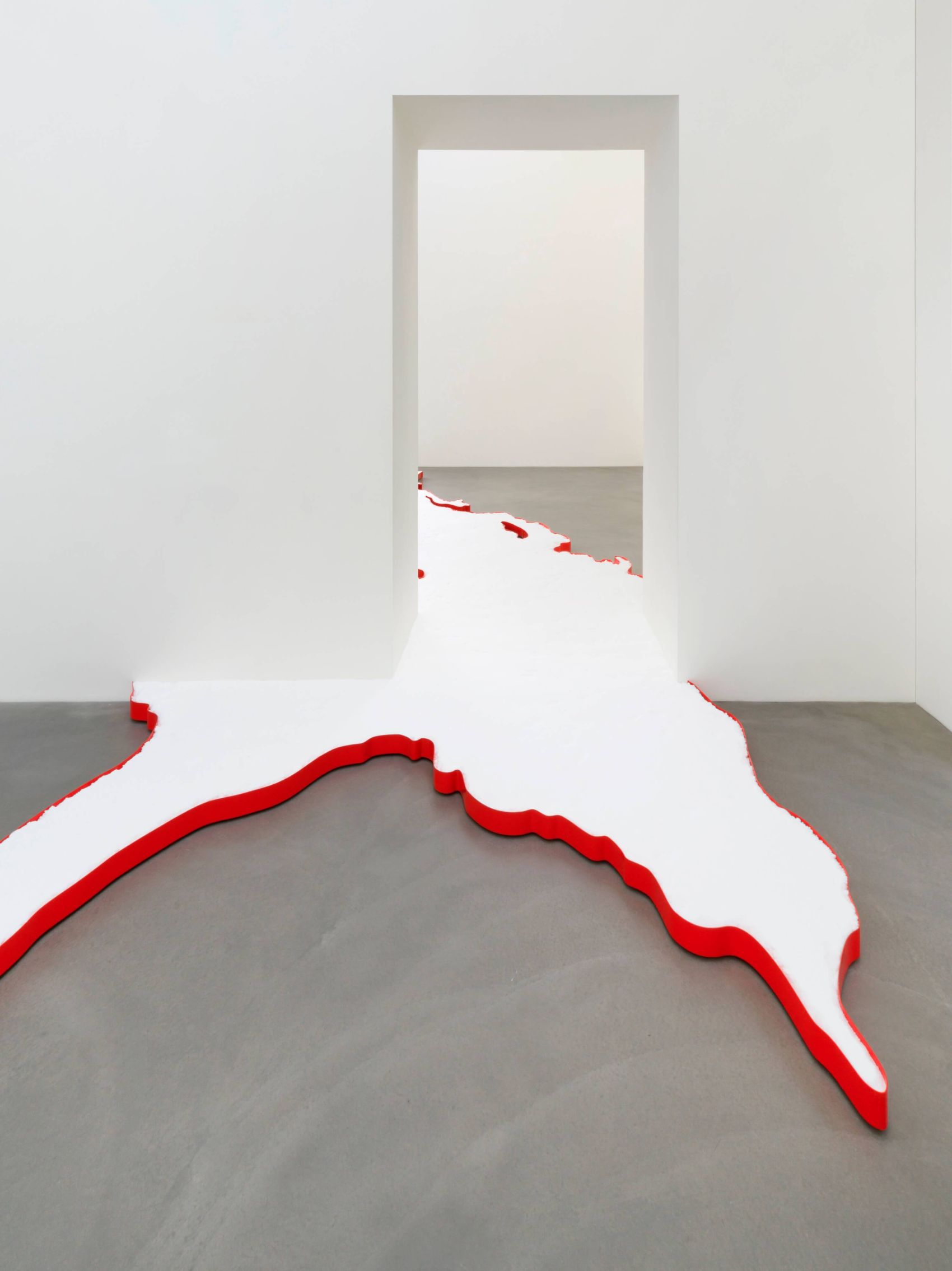
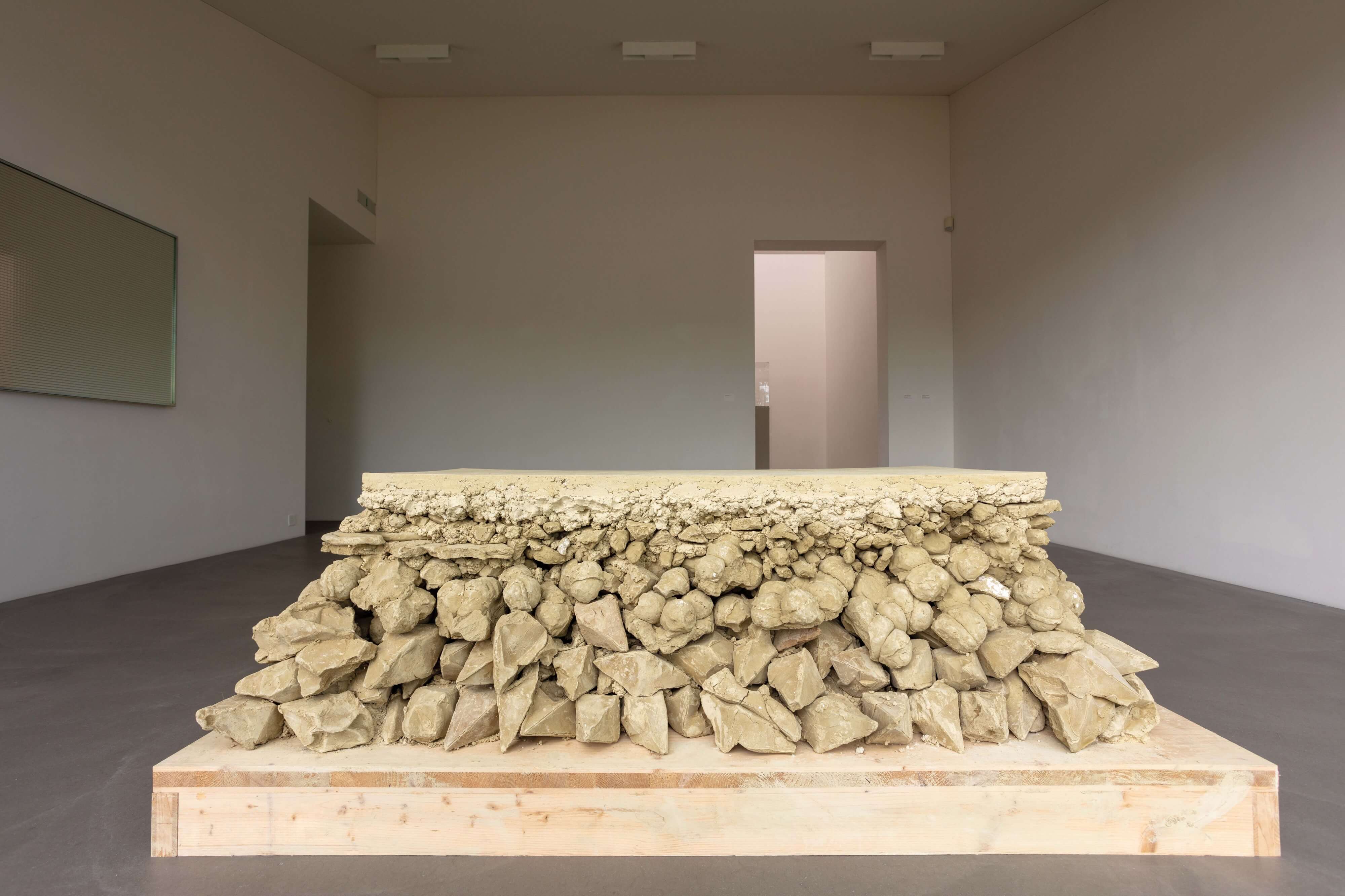
Alice Channer, Rockpool, 2022

Alice Channer, Rockpool, 2022

Eduardo Chillida’s bibliophilic work Aromas (2000) belongs to the artist’s late graphic oeuvre and exemplifies his engagement with immaterial, invisible phenomena. Through condensed fields of opening and overlapping lines, Chillida attempts to capture the ephemerality of scent – its movement, diffusion and evaporation. Aromas becomes a poetic metaphor for the invisible that is nevertheless physically perceptible.

Alice Channer’s Rockpool (2023) translates the experience of nature into an artificially reworked materiality. The sculpture evokes a dried-up basin filled with salt, while simultaneously alluding to the industrial extraction of this resource and to images of ecological catastrophe – such as the form of an oil slick. Here, Channer intertwines beauty and fragility with traces of human intervention in nature. Rockpool thus becomes an ambivalent image of ecological reality, in which natural form and industrial aesthetics are inextricably intertwined.

FAVOURITE WORK:

Alice Channer, Rockpool (2023)

SELECTION:

Regina Brülisauer, Assistant to the Director, Kunstmuseum / Kunsthalle Appenzell

“When I was asked whether I would like to choose a favourite work from the collection, I immediately thought of Rockpool, and I was delighted by the chance to rediscover it. When I started working at the Kunstmuseum Appenzell, it was the first piece of art I saw. Its radiance and the way it dominated the space with an unbridled presence evoked deeply personal feelings in me that continue to resonate to this day. To me, it embodies unrestrained force and strength, yet at the simultaneously conveys longing and pain.”

The words, in which Regina Brülisauer describes her first encounter with the work, can be found in the exhibition space.

FAVOURITE WORK:

Eduardo Chillida, Aromas (2000)

SELECTION:

Bücherladen Appenzell (Bookshop)

The Bücherladen Appenzell, run by Carol Forster, counts not only among the most beautiful bookshops, but also serves as a vibrant cultural venue with a wide range of events centred on the book. In cooperation with Kunsthalle Appenzell, it organises the biennial book art festival Kleiner Frühling, which takes place at Whitsun with readings, discussions, music, exhibitions and encounters in unusual locations, celebrating literature, translation and art.

“Art between two covers. A folio. Mysterious. Its content revealed only upon opening. Even before we turned the pages, we knew we would choose Eduardo Chillida’s Aromas. The book form as a repository, a treasure chamber for the artist’s loose leaves. On opening it, we discovered a profoundly poetic work, created just two years before Chillida’s death.

The themes that occupied Chillida throughout his life remain timelessly relevant and are echoed time and again in literature: What is space? What is body? What exists in between? Space, time, silence, rhythm, light, sea, clouds, air, tolerance, poetry. The title Aromas stands for inspiration, for enveloping presence, ultimately for perception with all the senses and the absorption of everything in between. The nose in the wind, the eyes open, semi-permeable skin. Chillida’s works are inspired by nature and the world around him. Leaves on a branch, the waves of the sea, wind and light are elements that decisively shaped his practice. He was not interested in cubic forms or right angles, but in living lines.

Against orientation, stability, security and knowledge he set uncertainty and wonder. This unrestrained, joyful vitality, coupled with curiosity, openness and profound sensitivity to nature and to people, closely links the artist’s thinking with the questioning and immersion in other worlds found in literature and poetry.

Yo soy un fuera de la ley (I am an outlaw), he said of himself.

Words open worlds and connect. They accompany our thinking, captivate us, tell stories and broaden our horizons. Ultimately, they can serve as signposts, guardrails and places of longing within our life paths. Chillida’s art does the same. Pure poetry.

Hay puertas al mar que se abren con palabras (There are doors to the sea that open with words)
(Rafael Alberti)

Was bleibt aber, stiften die Dichter (But what remains the poets provide) 
(Friedrich Hölderlin)

Room 3

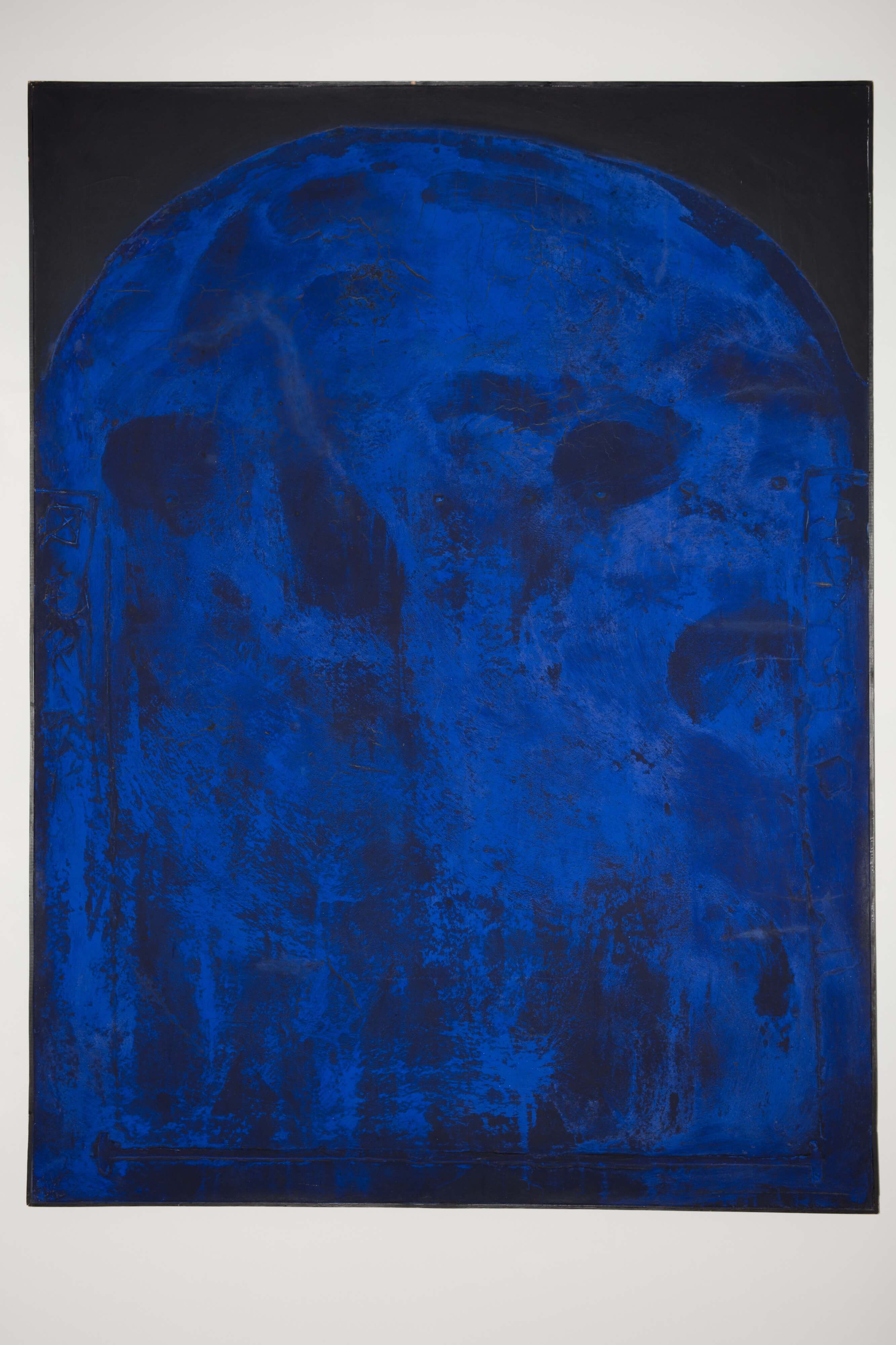
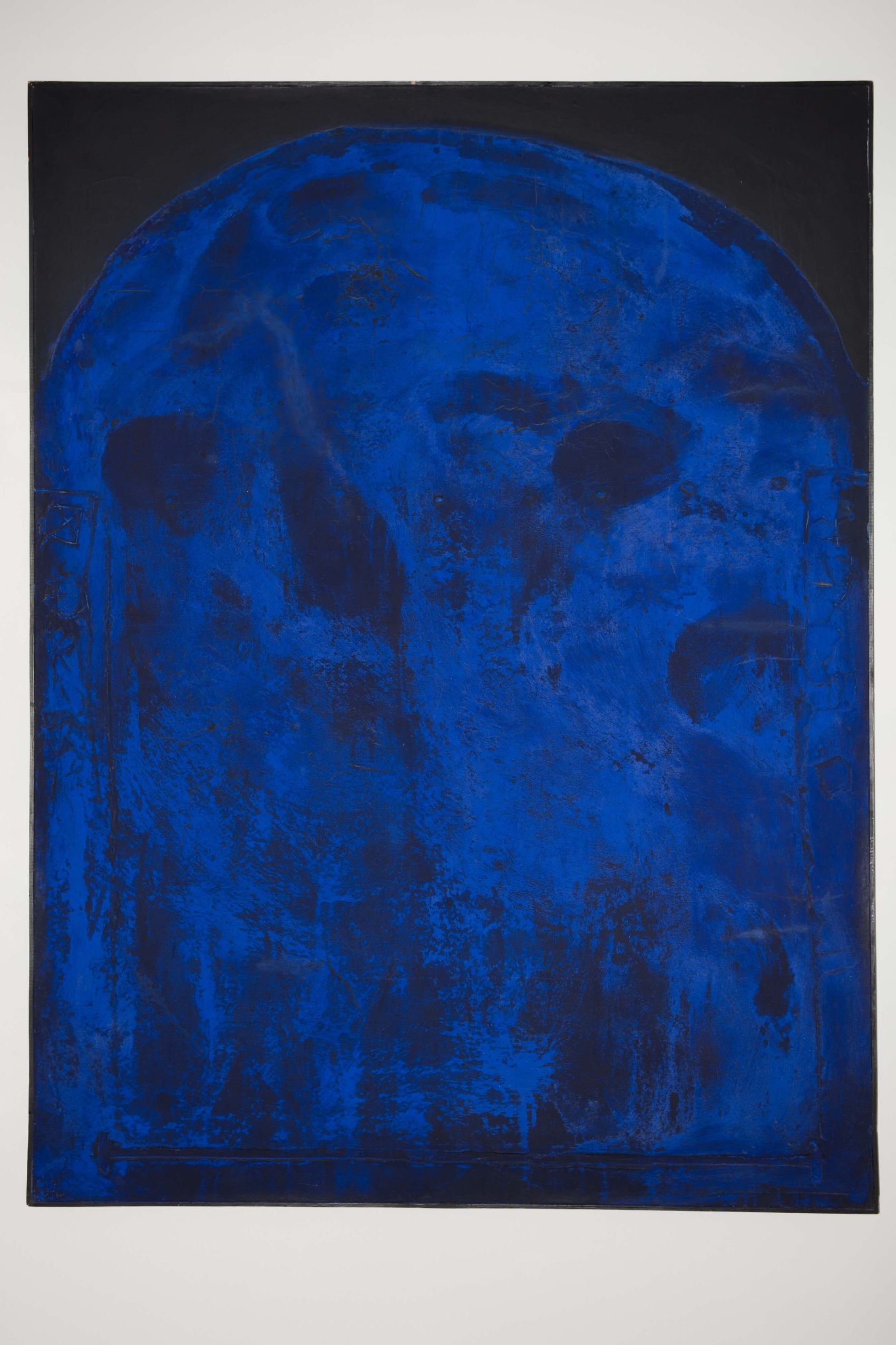
Antoni Tàpies, Pintura blava amb arc de cercle, 1959

Antoni Tàpies, Pintura blava amb arc de cercle, 1959

Eduardo Chillida and Antoni Tàpies shaped post-war Spanish art with an abstract language that bound philosophy and poetry closely to an exploration of material. While Tàpies, in his pintura matèrica („matter painting“), condensed earth, sand and paint into relief-like surfaces, Chillida sought in iron, stone and clay a sculptural form of space itself. In Pintura blava amb arc de cercle (1959), Tàpies applied a pastose mixture of blue pigment and sand gesturally onto the canvas; traces, signs and imprints sink into the dense surface structure. The painting is informed by social concerns without rendering them explicit. Instead, a large, rounded body remains physically present within the luminous painterly medium.

The question of materiality, surface and its effect on space finds a contemporary continuation in the work of Gerold Tagwerker. In scan.portrait (2007), glass, wired glass, mirror and zinc sheet are condensed into a plane that reflects, distorts and filters. The title alludes to scanning as a process of probing and simplifying – the portrait here appears not as a likeness but as a play between viewer, material and space.

FAVOURITE WORK:

Gerold Tagwerker, scan.portrait (2007) /
Nesa Gschwend, Living Fabrics 8 (2018) → Room 9

SELECTION:

Innerrhoder Kunststiftung (Appenzell Innerrhoden Art Commission)

The Innerrhoder Kunststiftung, represented by Rebekka Dörig-Sutter, Daniela Mittelholzer and Sandra Neff, supports contemporary artistic practice in the canton of Appenzell Innerrhoden by awarding grants and by acquiring works of art.

“Why two works? Because our discussion revealed precisely the full range of what contemporary art can encompass, from the raw and corporeal to the glassy and reflective. As an art commission, we do not make choices based on personal taste. We negotiate arguments, listen to one another, and allow ourselves to be persuaded by opposing views.

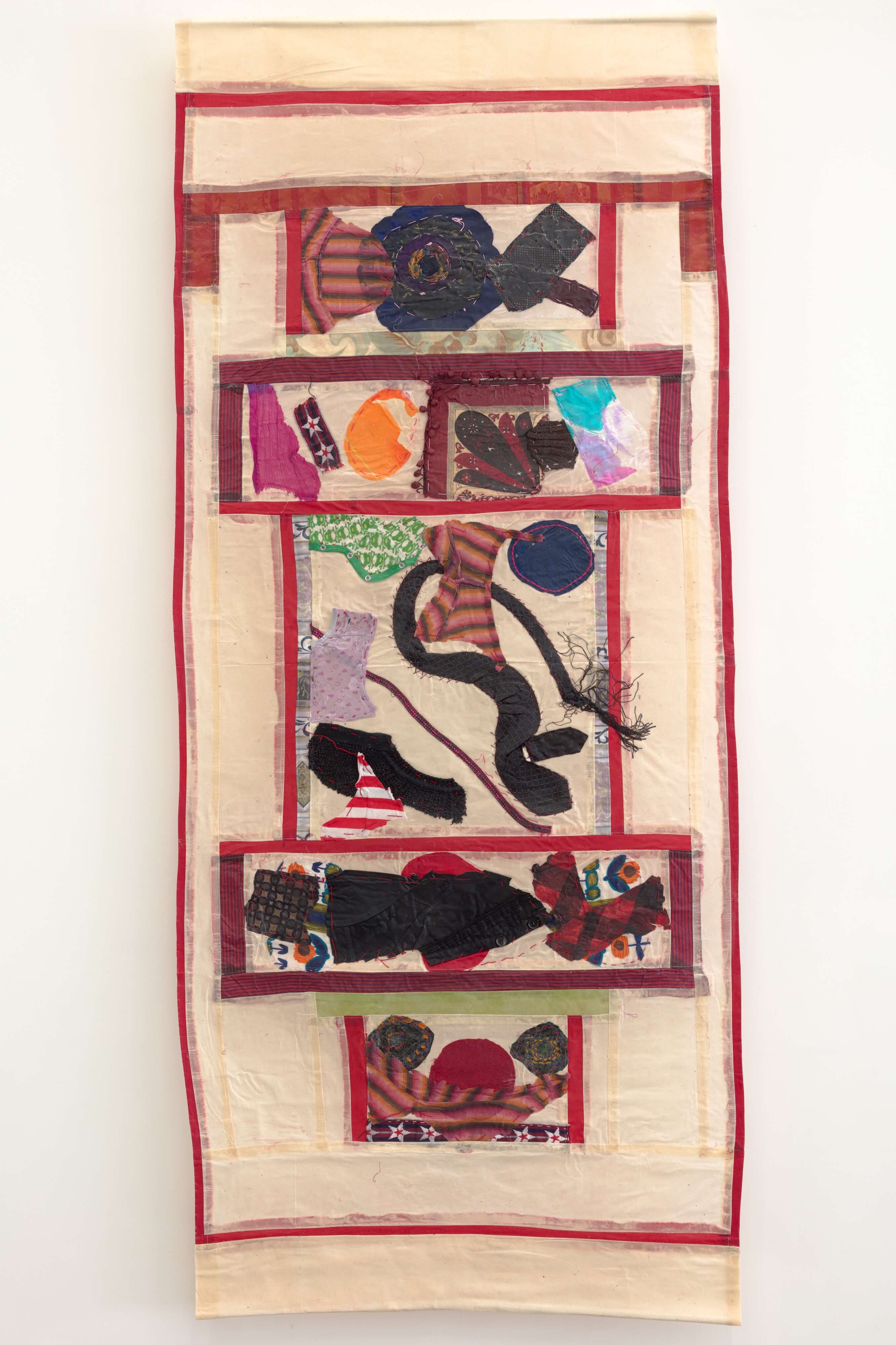
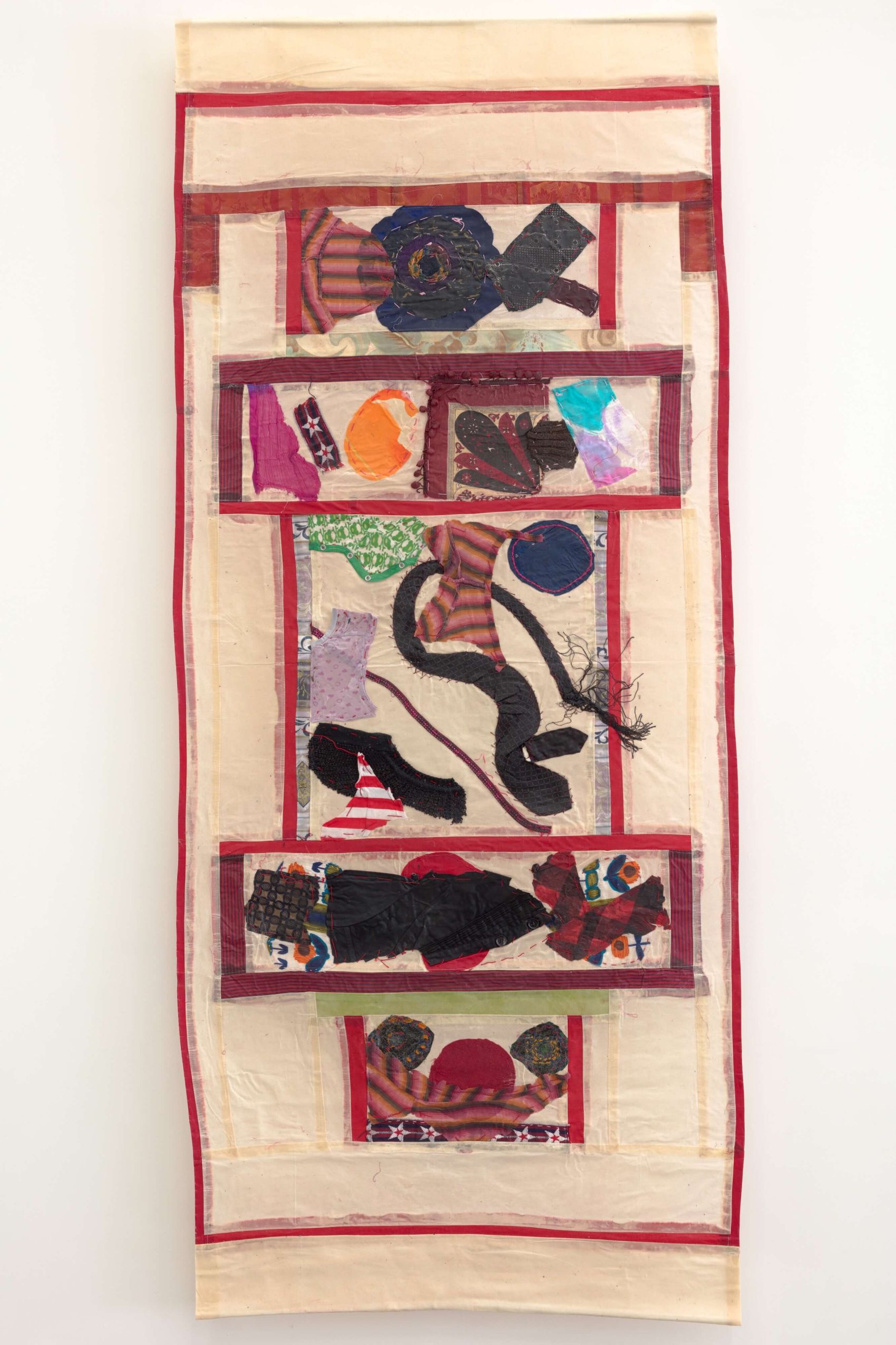
Nesa Gschwend’s textile work (in room 9) was not initially among our favourites. However, through looking at it together and reflecting on it, it revealed a distinctive presence. Coming from a background in textile design, Gschwend combines handcrafts such as knitting, knotting and sewing with performative processes and everyday materials. The deliberately unruly and sometimes grimy corporeality stores experience and raises questions of memory and identity. Precisely this closeness to the everyday, to the ‘body’, makes the work compelling: it is never merely beautiful, but moves, challenges, and shows the extent to which fabrics convey narratives. The fact that Gschwend connects textile techniques with performative practice is central to her artistic stance.

The decision on Gerold Tagwerker was immediate. His rigorously organised, square composition achieves an extraordinary effect with minimal means: mirror and mirrored foil surfaces absorb room, window and viewer alike. Order and grid collide with the contingencies of their surroundings; the work is never identical to itself, but rather reflects its environment literally. In this sense, it also reflects us as a committee negotiating difference. Tagwerker’s use of mirrors and mirrored foils is pivotal; the precision of the composition renders complexity even more apparent.

Together, these two positions embody what the Innerrhoder Kunststiftung stands for: an engagement with art in its full breadth. The selection of ‘our’ works makes tangible how conversations shift perspectives and how collective decisions can be forged.”

Room 4

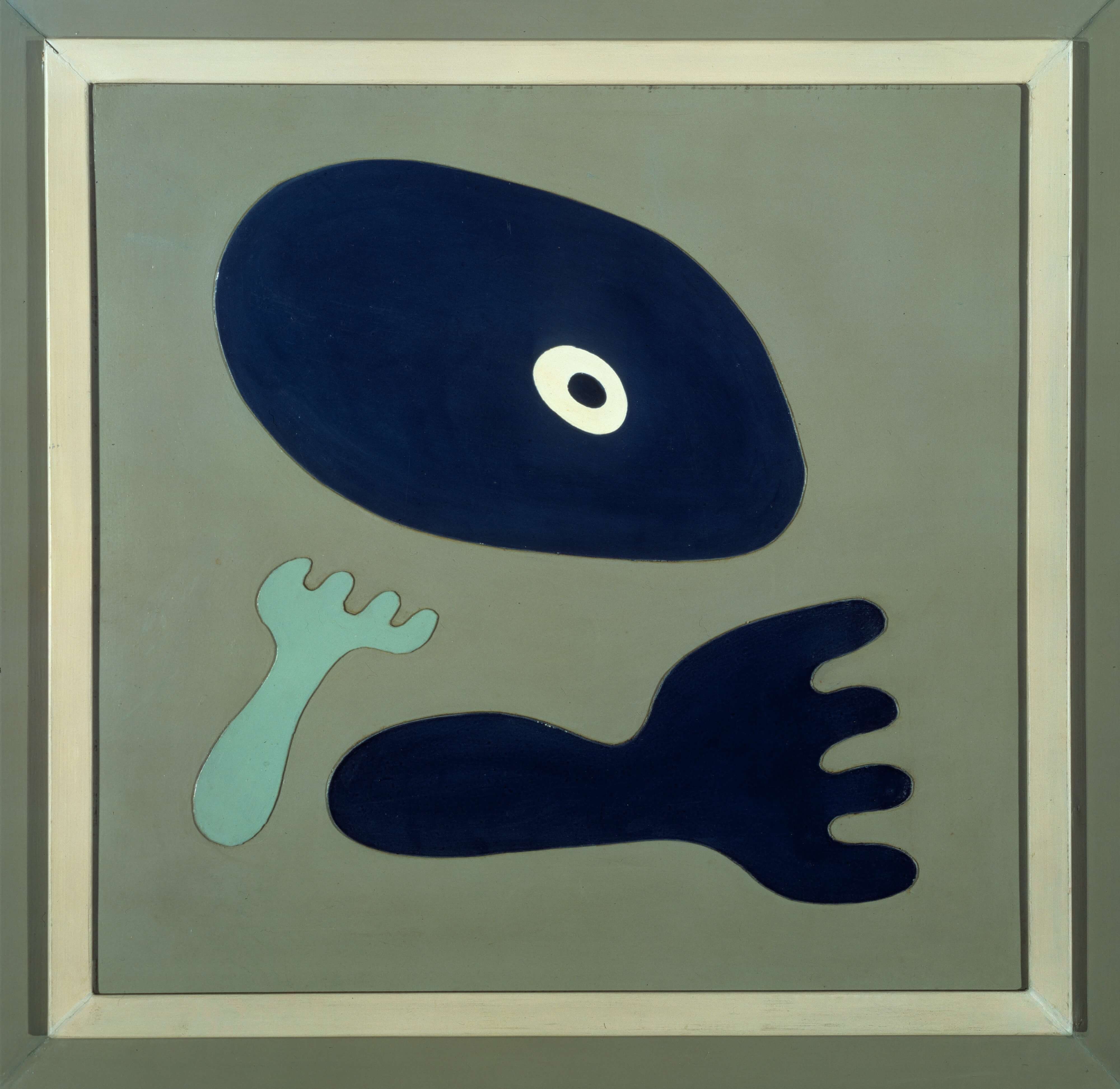
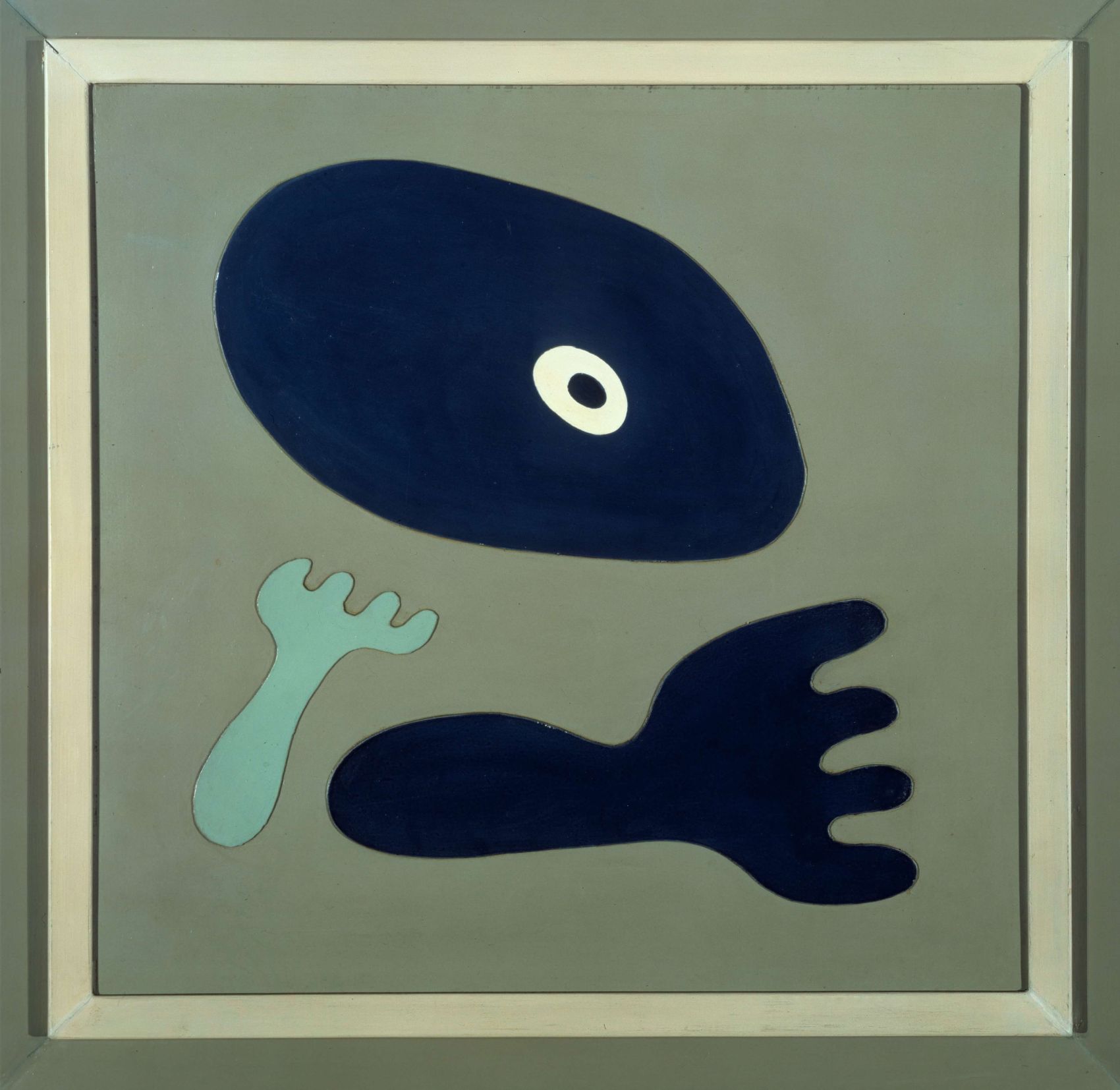
Hans Arp, Assiette, fourchettes et nombril, 1923

Hans Arp, Assiette, fourchettes et nombril, 1923

This room brings together works by Hans Arp and Wolfgang Nestler, both of whom explore the relationship between organic form, material and visual language. Arp’s early relief plays with the humorous estrangement of everyday objects, while his late marble sculptures distil elemental, poetic form-shapes. Nestler takes up this dialogue: his woodcuts condense organic lines into rhythmic planes, and Ein Vogelei nur zum Bewundern (A Bird’s Egg Just for Admiring, 2013) translates the notion of purposelessness into a fragile balance. Together the works create a dialogue between Dadaist playfulness, sculptural abstraction and contemporary form-poetry.

FAVOURITE WORK:

Hans Arp, Assiette, fourchettes et nombril (1923)

SELECTION:

Simona Martinoli (Fondazione Marguerite Arp, Locarno)

Simona Martinoli is Director of the Fondazione, where she oversees the collection of Jean Arp, Sophie Taeuber-Arp and Marguerite Arp, together with the archive and library, while coordinating exhibitions, research and cultural activities. Since 2000 the Fondazione has been a cooperation partner of the Heinrich Gebert Kulturstiftung Appenzell.

“In the early 1920s, the poet and artist Hans Jean Arp (1886–1966) concerned himself with the problem of the ‘object-language’: ‘le problème du language-objet est apparu en 1920: nombril, horloge, poupée, etc..’, he remarked in conversation with his artist friend Camille Bryen (1). Out of this arose the first objet-reliefs, works in painted wood or cardboard in which objects and body parts are lifted from their usual context, imaginatively combined and at times transformed into hybrid beings. The pictorial repertoire of that period included everyday items (plates, forks, bottles, ties …) alongside body parts such as heads, moustaches or navels.

The exhibited work Assiette, fourchettes et nombril (1923) is an important example of this type of relief in Arp’s practice and characteristic of his production in the 1920s, a transitional phase from Dada to Surrealism, just before the Surrealist Manifesto of 1924.

On the grey ground appears a white navel within a blue plate, beneath it two forks of different sizes – the larger painted blue, one of Arp’s favoured colours. The whimsical juxtaposition of an organic form with artefacts sparks unexpected associations, which also surface in Arp’s poems, such as in Isabelle et les assiettes (1951): ‘des assiettes-nombrils, / des assiettes originelles!’ (2) With the objet-language, a concordance between his poetic and pictorial work emerged, which had not been the case in the Dada years when Arp tended towards geometric forms.

In the portfolio 7 Arpaden (1923), published by Kurt Schwitters, Arp’s symbolic imagery is further developed in a series of lithographs. The navel, symbol of the origin of life and central to his poetic and visual creation, is once again to the fore.

Why is Assiette, fourchettes et nombril my favourite work? In both the navel and the plate one recognises the form of the ‘moving oval’ – an archetypal shape in Arp’s vocabulary, which he described as ‘an emblem of the eternal transformation and becoming of bodies’ (3). A combination that can evoke cosmic forms – like planetary rings – is here arranged with cutlery for consumption: Arp’s subversive humour is revealed in its purest form.”

(1) “Colloque de Meudon” between Arp and Bryen (1956), in Jean Arp, Jours effeuillés (Paris: Gallimard, 1966), 432.
(2) Jean Arp, “Isabelle et les assiettes” (1951), in Jours effeuillés (Paris: Gallimard, 1966), 368.
(3) Unsern täglichen Traum... (Zurich, 1955), 12.

Room 5

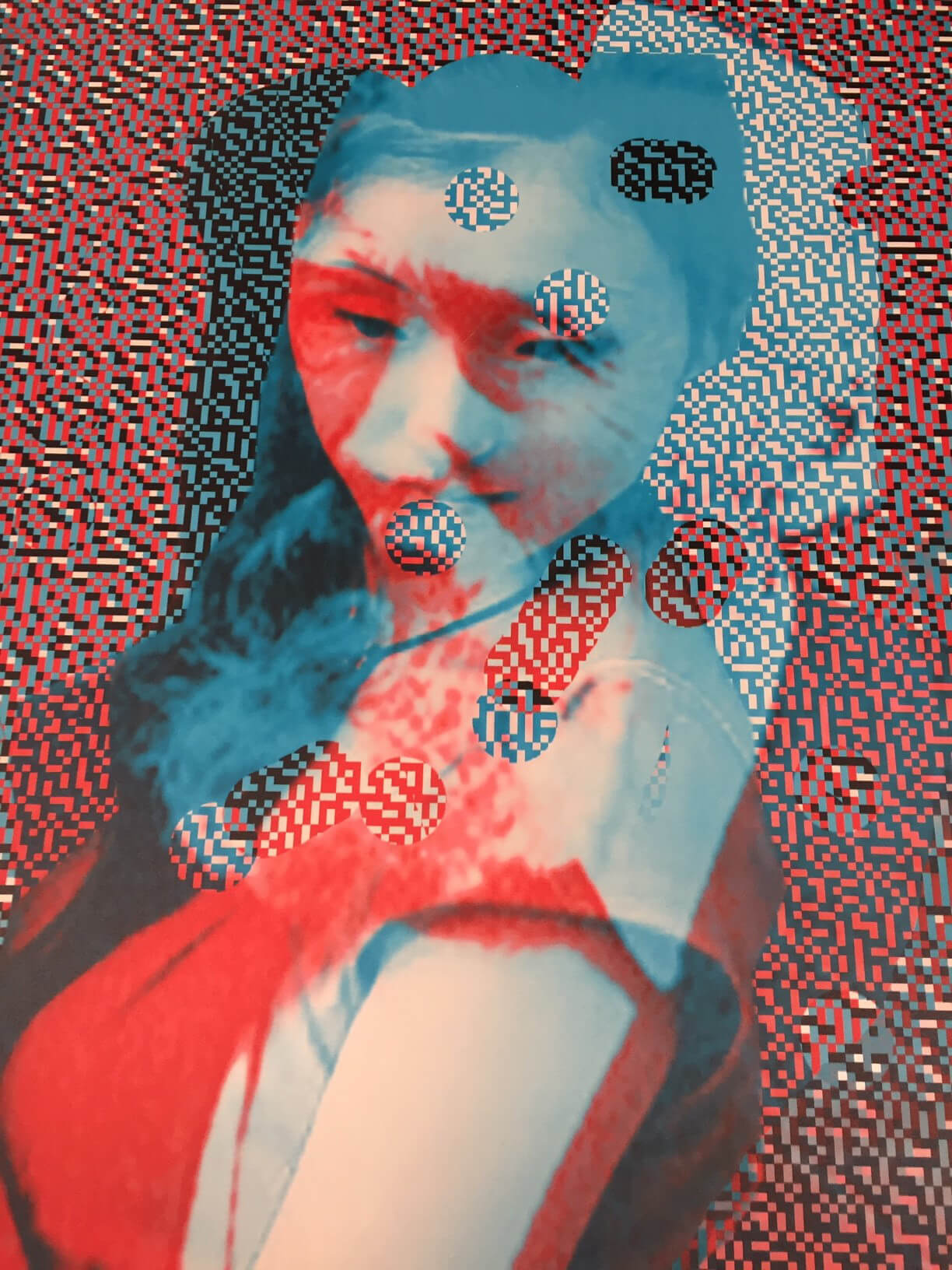
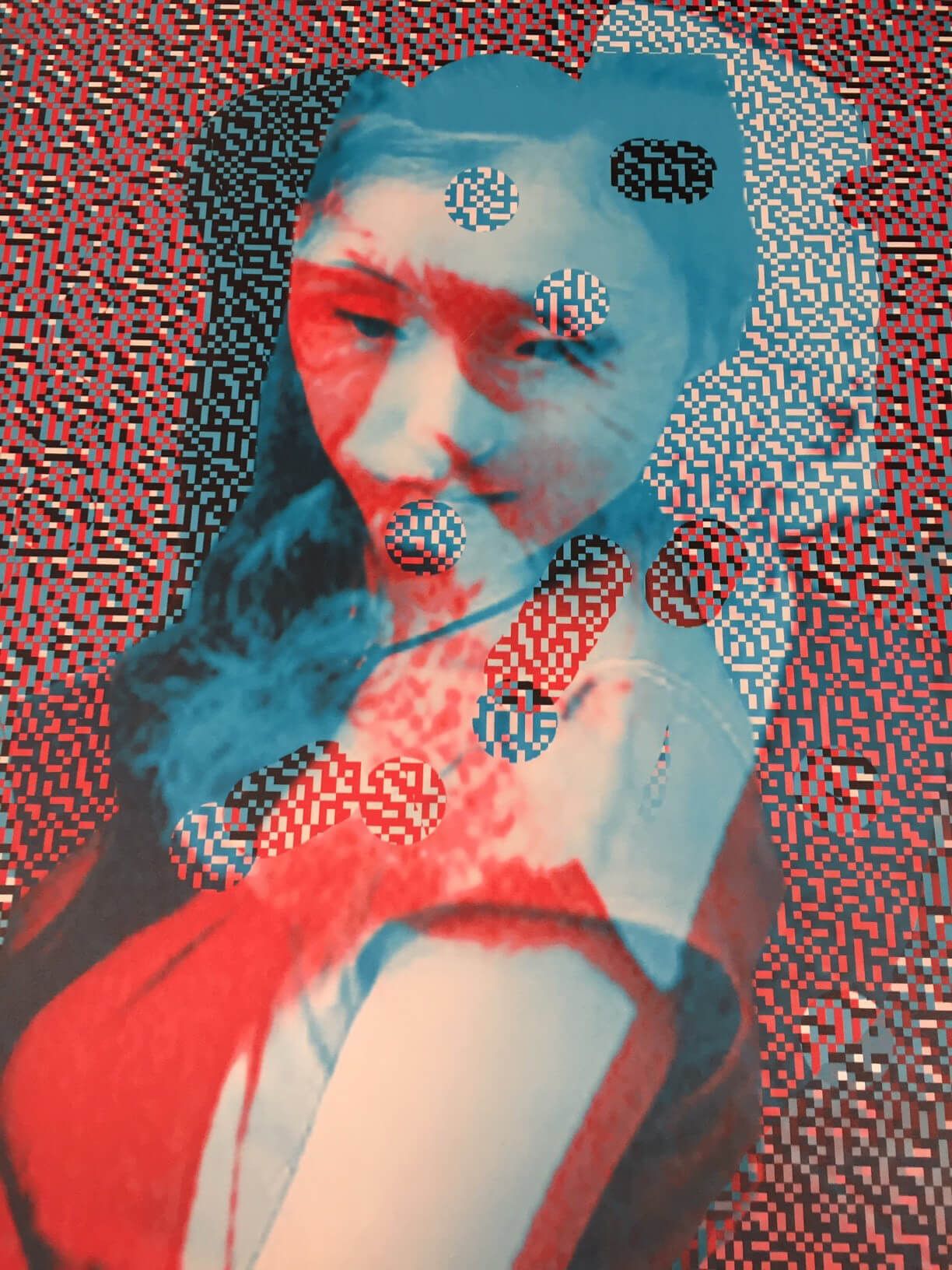
Christian Meier, Lochbild, 2012

Christian Meier, Lochbild, 2012

This room presents portraiture as both a mirror and a projection of identity. Carl August Liner’s portraits of women from the first half of the twentieth century reveal an approach to the motif shaped by a sensitivity of line. Set against these are Nesa Gschwend’s self-portraits, which interrogate the self in a processual, contemporary idiom. Finally, Christian Meier extends the tradition of portraiture into an experimental visual language with Lochbild (2012): he combines two portraits in one image – that of Theodor Storm, author of numerous poems intertwining images of nature with sentiments of longing and melancholy, and that of a Chinese woman. When viewed through 3D glasses, one image or the other comes to the fore, causing perception to oscillate between the figures and to remain in a state of continual uncertainty. The result is a dialogue between traditional role images, self-reflexive enquiry and the experimental deconstruction of portraiture.

FAVOURITE WORKS:

Portraits of Women by Carl August Liner

SELECTION:

Sebastian Fässler, Appenzell

Sebastian Fässler is a goldsmith, draughtsman and traditional craftsman in Appenzell, continuing his family’s practice while creatively combining materials such as leather, metal and stone. He also designs objects for various international designers, thus linking local craft with contemporary thought. He is a loyal visitor, a critical observer and a valuable interlocutor.

“I was delighted to be given the opportunity to choose works, and immediately turned to the portraits and drawings of women by Carl August Liner. Drawings are first thoughts on paper, spontaneous yet purposeful, a kind of credo – something that also fascinates me in contemporary art.

I grew up in Appenzell surrounded by the visual arts, with the father, Carl August Liner, and Johannes Hugentobler, and later with the son, Carl Walter Liner. As a child they were ever-present. The precision of the father Liner, as chronicler and ultimate draughtsman of Appenzell, left its mark on me. He was a keen observer. Yet the Liner works around us were not the key pieces, but rather slightly off-centre, charming, modest in scale or treatment, not very beautiful.

The frontal portrait of his daughter Martha is astonishing. It conveys a mood that transcends the rural setting, a modernist spirit, slightly disquieting. The portraits signal a sense of departure – though Liner does not quite dare to give it full expression. This reluctance to take risks is itself an Appenzell story: the desire to please, even in provocation. But clarity of decision is as fundamental as learning to read and write. When I find that exactness of observation in others, then we understand each other nonverbally – the artists become allies.

What is decisive for me is the role of women in the period from 1890 to the 1920s, to which these drawings and the painting belong. In the portraits, they appear self-assured, they accept their fate, they embody their time. Their gazes are not particularly happy – rather determined, questioning, thoughtful. Women held a strong position, yet everything was reduced to their womanhood. I cannot help but feel that, had they been more fully supported in their time, things might have turned out differently.

The suggested attire is chosen with great specificity by Liner, rendered with the same precision as the textiles themselves. They speak of status and of life. Textile – a form of expression that has always been decisive, and always will be.”

Sebastian Fässler supplemented his selection with pieces from his own collection.

Room 6

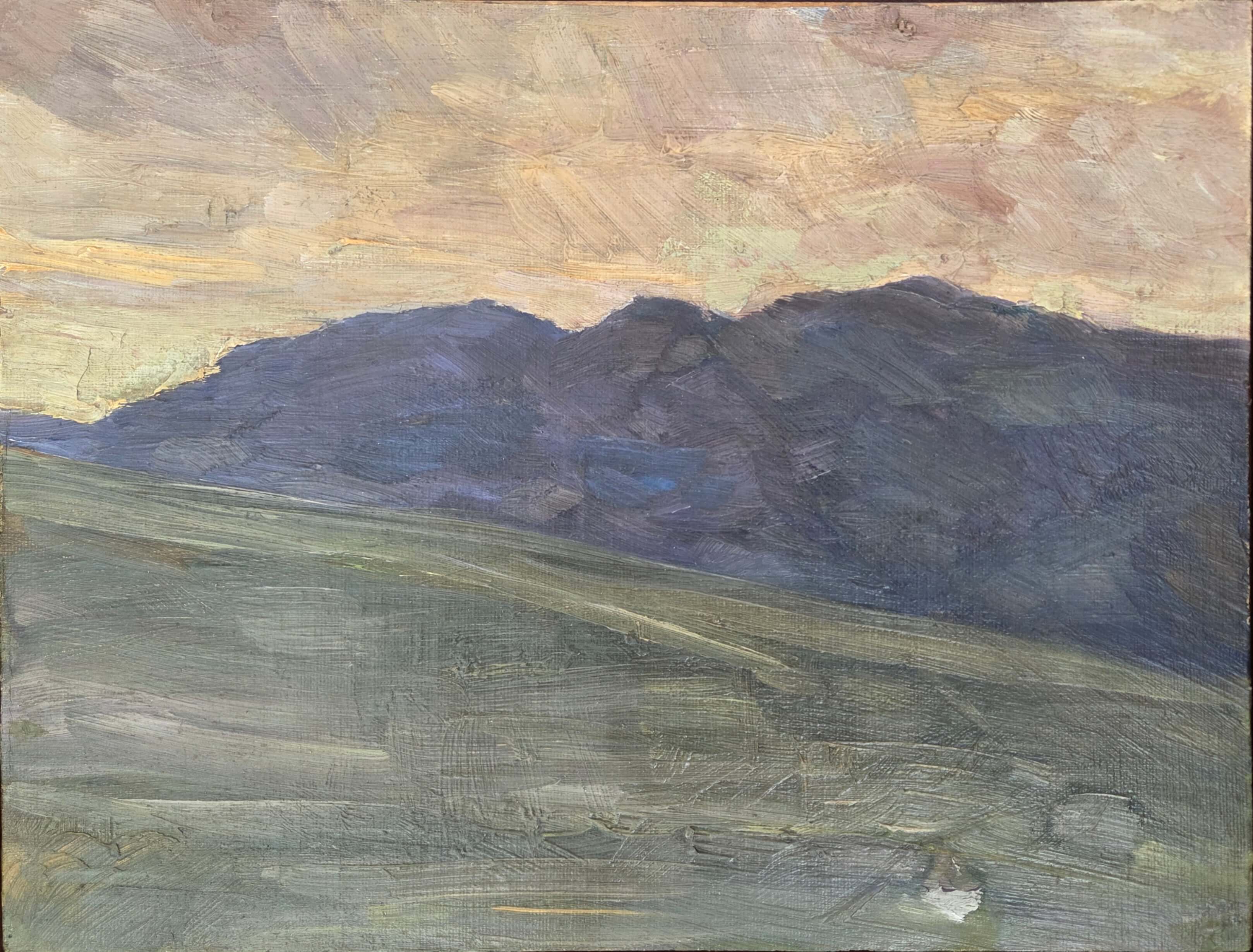
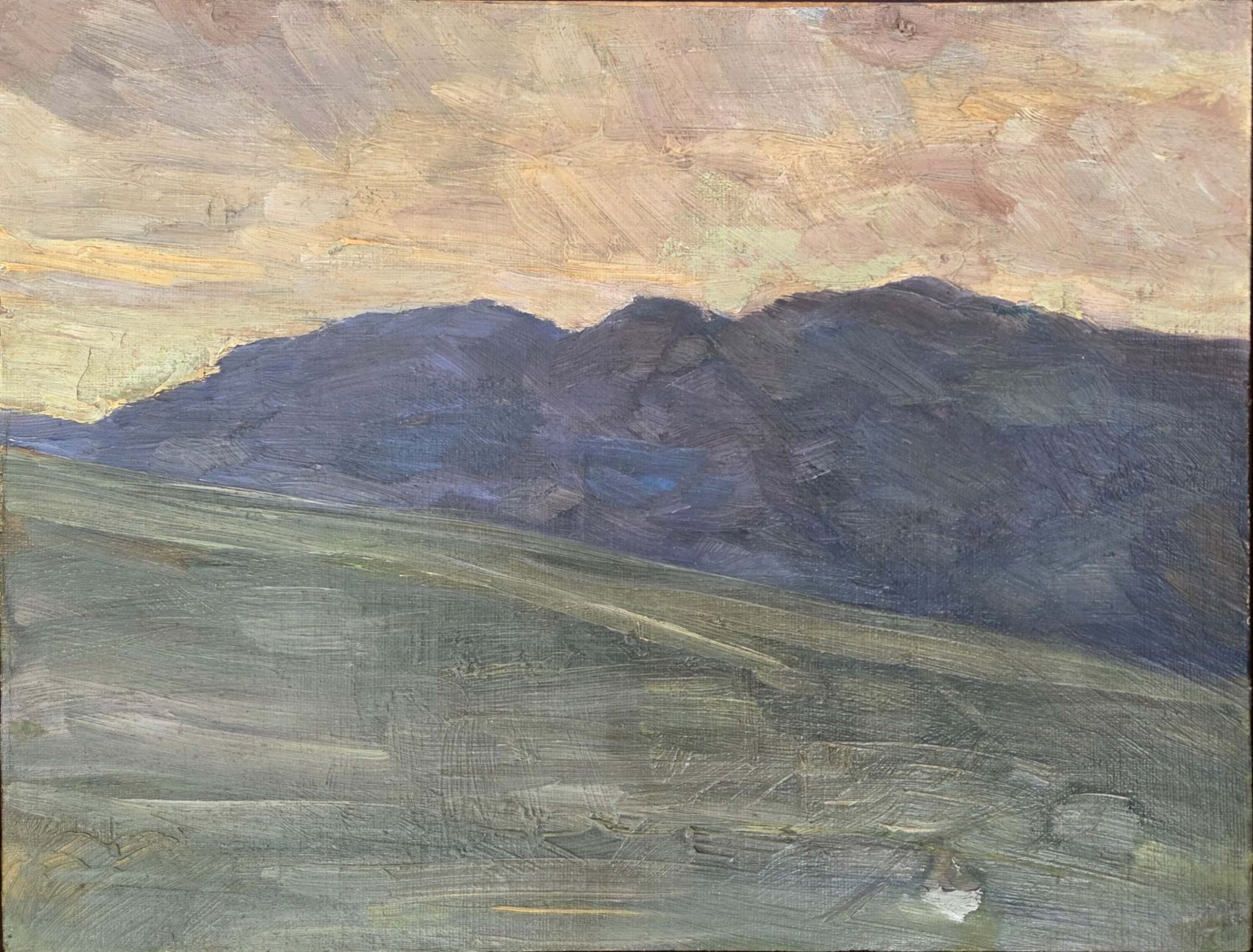
Carl August Liner, Appenzeller Landschaft beim Einnachten, o.J. / undated

Carl August Liner, Appenzeller Landschaft beim Einnachten, o.J. / undated

Here, a nocturnal atmosphere unfolds between romantic experience of nature and abstraction. Carl August Liner’s moonlit and evening landscapes conjure the quiet poetry of twilight, captured in painterly gesture. Miriam Prantl’s light installation Lichtpunkt (Light Point, 2009) translates this motif into the language of technology. Theodoros Stamos extends this arc with Infinity Field – Lefkada Series, for C.D. Friedrich (1980/81), a work that takes up the romantic tradition of Caspar David Friedrich and renders it in abstract fields of colour. Dark expanses, edged with radiant borders, open a view onto the infinite: a landscape of memory that fuses natural experience with spiritual transcendence.

FAVOURITE WORKS:

Carl August Liner, Alp Sigel im Mondschein (Alp Sigel in Moonlight, n.d.), Appenzeller Landschaft beim Einnachten (Appenzell Landscape at Dusk, n.d.), Abendstimmung in Sonnenhalb (Evening Mood in Sonnenhalb, n.d.); Miriam Prantl, Lichtpunkt (Light Point, 2009)

SELECTION:

Museum Appenzell

The Museum Appenzell is dedicated to the history, culture and art of Appenzell Innerrhoden, presenting traditions such as folklore, crafts and folk art through exhibitions and events. Birgit Langenegger, Martina Obrecht and Lucia Genova made their selection in dialogue with the museum’s current exhibition Night. From Bedrooms, Stars and Lanterns (until 25 May 2026).

“Between Moonlight and LED Pixels

Abendstimmung in Sonnenhalb (Evening Mood in Sonnenhalb), Appenzeller Landschaft beim Einnachten (Appenzell Landscape at Dusk), Alp Sigel im Mondschein (Alp Sigel in Moonlight) – these are the titles of Carl August Liner’s works. One can imagine Liner the elder venturing out with his easel in the evening to capture these particular atmospheres. No figures appear in the paintings, only landscapes bathed in evening light or moonshine. Nature radiates tranquillity and invites pause.

At the same time, around 1900, so-called ‘moonlight postcards’ enjoyed popularity in Europe: picture cards in which landscapes, villages and towns were cast into nocturnal romance by means of a blue overprint and a stylised full moon. Such motifs also survive from Appenzell Innerrhoden – for example of the Äscher, the Hoher Kasten or the village of Appenzell under moonlight. Technically simple but effective, these views reflect a comparable longing for the poetry of night that also finds expression in Liner’s works.

Today, night without artificial light has become unfamiliar to us. While Liner fixed twilight in paint, Miriam Prantl works with LED pixels. Her light installation Lichtpunkt (Light Point, 2009), created around one hundred years after Liner’s paintings, consists of LED pixels arranged side by side and one above the other. These glow in programmed sequences, forming ever new patterns. The work draws the viewer into an interplay of colour, light and rhythm. At times the pixels shine monochrome in bright neon hues, at others shimmering points of light in pastel tones dance out of line. As daylight fades the work gains intensity – at its most powerful, perhaps, at night, when the museum is long closed.”

FAVOURITE WORK:

Carl August Liner, Fähnern bei Sonnenuntergang (Fähnern at Sunset, n.d.)

SELECTION:

Kulturgruppe Appenzell (Appenzell Cultural Association)

Since the 1980s, the Kulturgruppe Appenzell has been organising a diverse programme of small-scale performing arts, with events spanning music, cabaret and film. Its active members are Silvio Signer, Monica Dörig, Monika Bischofberger, Alfred Fässler, Toni Kölbener, Carole Dobler and Maria Inauen. The Kulturgruppe is a cooperation partner and has been organising events at the Kunsthalle since 2018.

“Seemingly modest and smaller than an A4 sheet, this Fähnern bei Sonnenuntergang (Fähneren at Sunset) by Liner almost disappears beside the large-format works. Yet not for us, for Liner has perfectly captured the warm glow of evening light on hardboard. The view and atmosphere correspond almost exactly to what we and the artists performing here see from the Kunsthalle. Between the shared evening meal at the long table and the start of the performances, there are often a few minutes left for the enjoyment of the landscape, and not infrequently both performers and audience alike fall into rapture at the sight of the Fähnerenspitz. And in any case, as an association devoted to the small form, we are of course admirers of the modest scale and chromaticity here – qualities that harmonise wonderfully with the cultural highlights we bring to Appenzell.”

Room 7

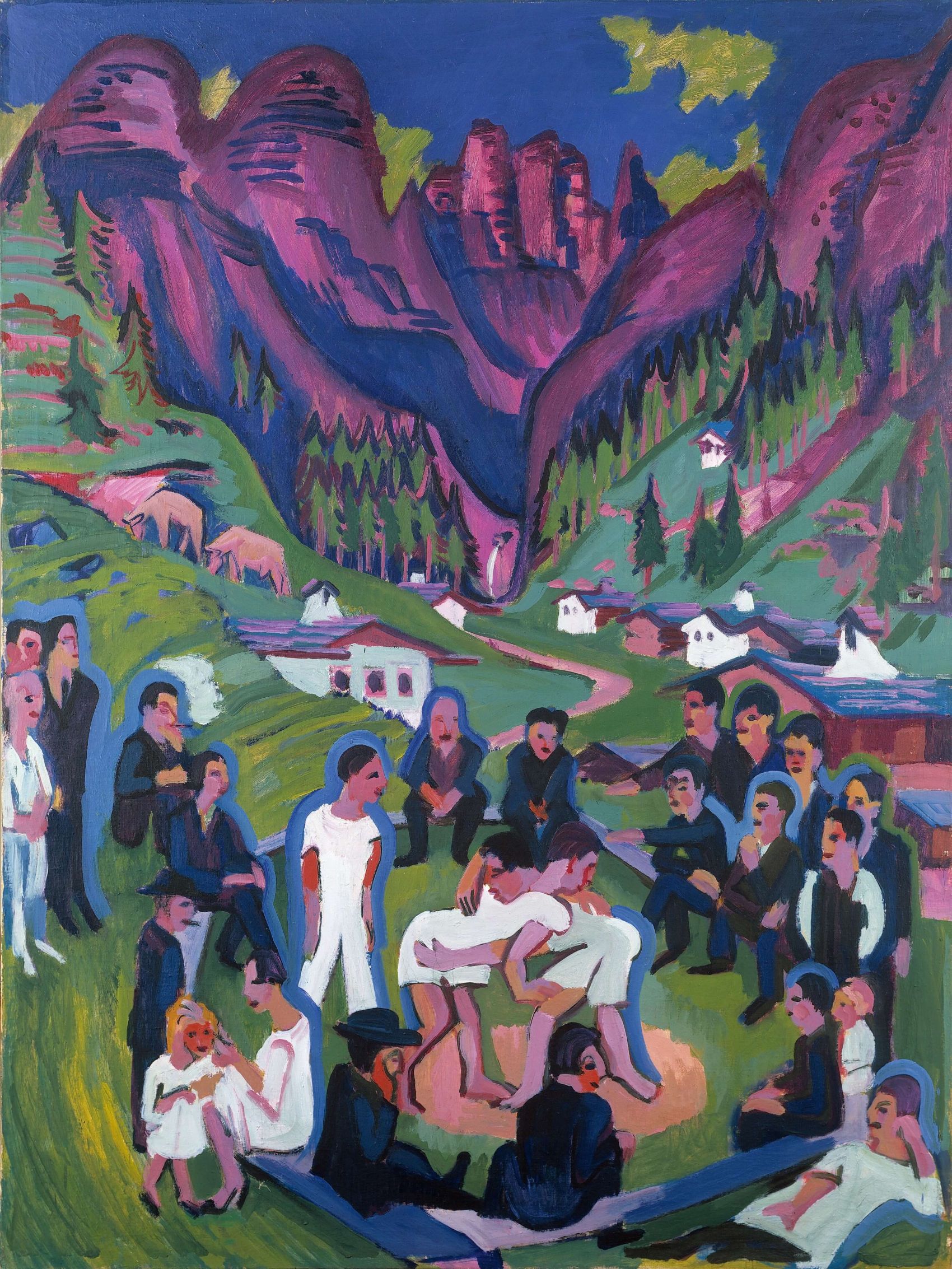
Ernst Ludwig Kirchner, Ringer in den Bergen (Sertigdörfli), 1926

Ernst Ludwig Kirchner, Ringer in den Bergen (Sertigdörfli), 1926


Here the gaze turns to the mountain landscape as both cultural and artistic resonance space. Ernst Ludwig Kirchner’s Ringer in den Bergen (Sertigdörfli) (Wrestlers in the Mountains [Sertigdörfli], 1926) combines expressive chromatic intensity and monumental mountain forms with the depiction of men locked in wrestling combat. Carl August Liner’s Schwingfest, Appenzell (Wrestling Festival, Appenzell, 1924) takes up the same motif, yet renders it in a cheerful, folkloric atmosphere. Hans Krüsi’s image of an Appenzell house Ohne Titel (Untitled, n.d.) complements this dialogue from a naïve, poetic perspective, referring to everyday life in the alpine landscape.

FAVOURITE WORK:

Ernst Ludwig Kirchner, Ringer in den Bergen (Sertigdörfli) (Wrestlers in the Mountains [Sertigdörfli], 1926)

SELECTION:

Standeskommission Appenzell Innerrhoden (Cantonal Government of Appenzell Innerrhoden)

The Standeskommission Appenzell Innerrhoden is the executive authority of the canton. It is represented by Roland Dähler, Head of Government (Department of Economic Affairs), Angela Koller, Deputy Head of Government (Department of Education), Monika Rüegg Bless, Deputy (Department of Health and Social Affairs), Ruedi Eberle, Treasurer (Department of Finance), Stefan Müller, Councillor (Department of Agriculture and Forestry), Hans Dörig, Councillor (Department of Construction and Environment), Jakob Signer, Councillor (Department of Justice, Police and Military).

“Political debates are often compared to an arena – a stage on which personalities with divergent ideas and values meet, wrestling with arguments to convince those present. The term has historical roots in the ancient amphitheatres where contests and cultural performances took place – struggles for influence and power no less fierce. In this analogy to political life, Kirchner’s Ringer in den Bergen stands as a powerful statement. The painting recalls the sporting tradition of Swiss wrestling (Schwingen) and situates it before the rugged yet majestic mountain world.

The work captures the dynamism and concentration of the wrestlers fighting on the village’s edge – in a valley basin and encircled by spectators. Particularly striking is Kirchner’s inclusion of the picture’s edge as a compositional element. The bold lines and vibrant play of colour across the frame suggest continuing motion, allowing the image to expand beyond its own limits.

May the cantonal government also be permitted, at times, to ‘paint beyond the frame’? Or is it bound always to remain within its given borders? Is it expected to do so? And if it does not, is that courage – or recklessness? A venture off course, even?”

FAVOURITE WORK:

Hans Krüsi, Ohne Titel (n.d.)

SELECTION:

Appenzellerland Tourism, represented by Guido Buob, Andrea Manser and apprentices Zoe Rusch and Flavia Schmid

“We chose the picture by Hans Krüsi because it depicts the Appenzell landscape in such a distinctive manner. On the one hand, it recalls the perfect peasant paintings of many renowned Appenzell folk artists. On the other, we love its cheerfulness, its colour, its playfulness tinged with mischief and humour. Typically Appenzell, typically Krüsi! In a single sentence: it is imperfectly perfect.”

Room 8

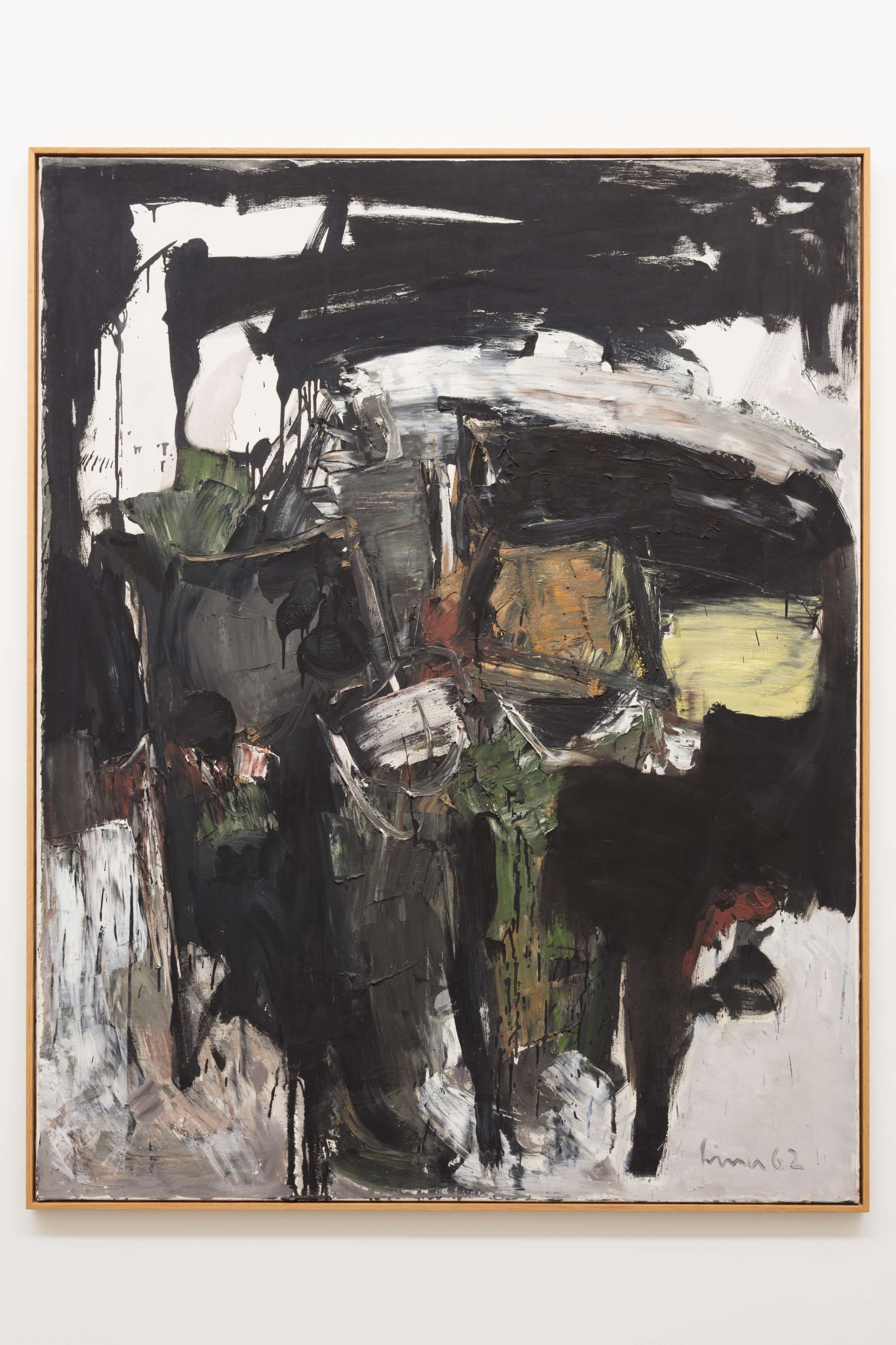
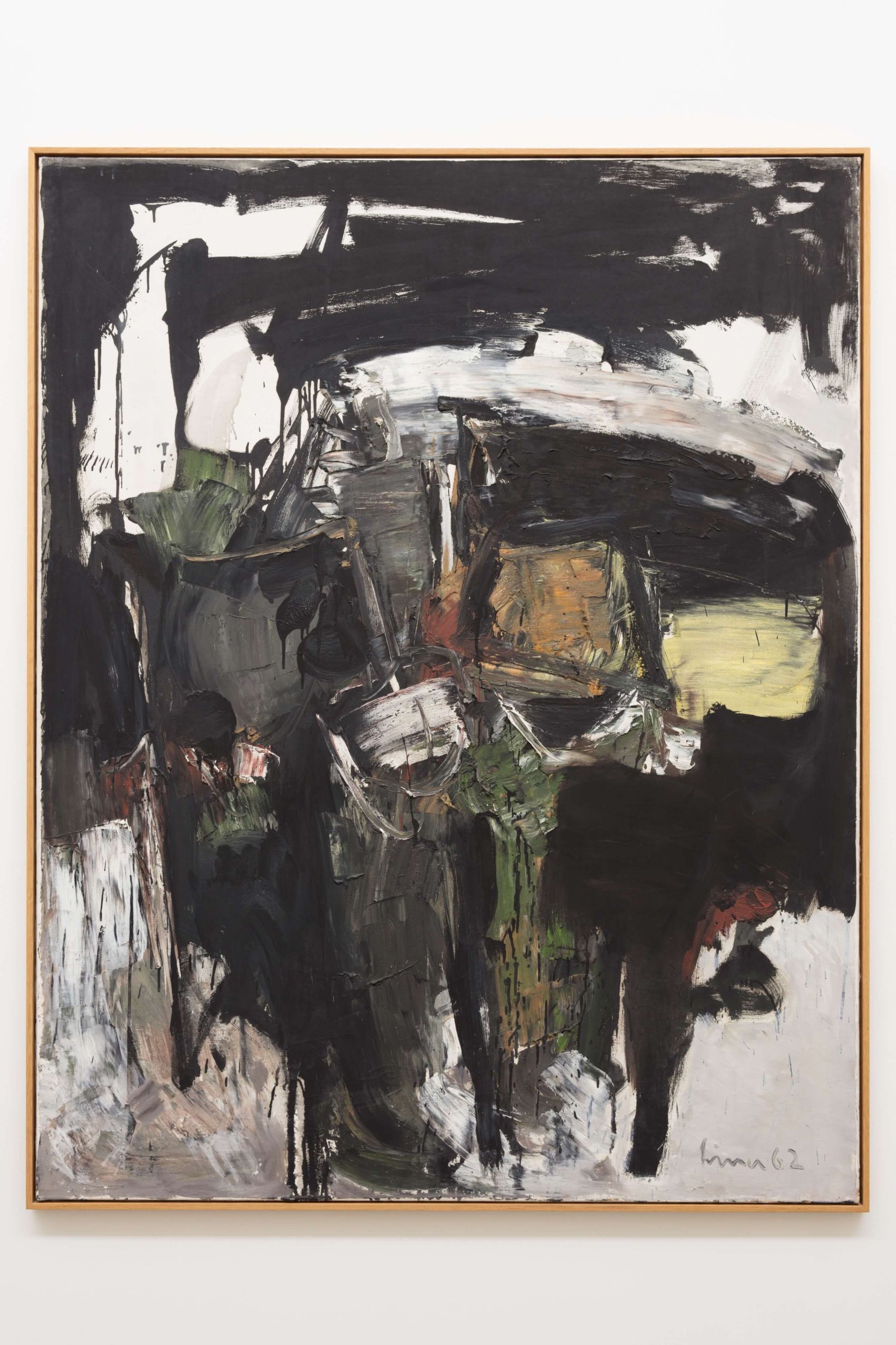
Carl Walter Liner, Komposition Schwarz / Weiss / Gelb (Eccesia), 1962

Carl Walter Liner, Komposition Schwarz / Weiss / Gelb (Eccesia), 1962

Room 8 brings together works that render human experience visible between hope and threat, departure and violence. Jonathan Bragdon’s Jessies Geburt (Jessie’s Birth, 1983) presents a deep black form, evoking a gateway, a mirror or a face without settling into any fixed reading. It becomes a symbol of the indeterminate, an image of transience and the fleeting, directing the gaze inward and opening a meditative, existential experience – while at the same time the title points to the beginning of life. Lorenz Spring’s Selbstgespräch (Soliloquy, 1993) exposes an inner rupture, while Walter Angehrn’s text work Lohnt sich das lohnt sich... (Is It Worth It, It Is Worth It..., 2019) raises questions of value and meaning in lapidary language.

FAVOURITE WORK:

Lorenz Spring, Selbstgespräch (Soliloquy, 1993) /
Carl Walter Liner, Wasserträgerinnen (Water Carriers, 1937) → Room 5

SELECTION:

Bushra and Nayab Khalid / Asylum Centre Appenzell

Bushra and Nayab Khalid are regular visitors to the “Open Studio for Young People” at Kunsthalle Appenzell – a shared creative space developed together with the Asylum Centre Appenzell, inviting young people to work with art educator Domenika Chandra.

“It had to be two works – there was no question about it: Carl Walter Liner’s Wasserträgerinnen (Water Carriers, 1937) and Lorenz Spring’s Selbstgespräch (Soliloquy, 1993). The motif of the three water carriers by Carl Walter Liner awakened memories for the sisters of their homeland Pakistan. There, they too had to fetch water and carry it home on foot, and balancing loads on the head was a familiar task. Encountering Lorenz Spring’s work was entirely different: Bushra’s reaction was immediate – ‘When you look at this picture, you instantly feel stress.’ The words scrawled across the canvas, Brutale Welt (Brutal World), they connected with the experiences that compelled them to leave their home. ‘This work,’ they said, ‘shows the reason why we are here.’”

Room 9

Nesa Gschwend, Living Fabrics 8, 2018

Nesa Gschwend, Living Fabrics 8, 2018

In this room the themes turn around the body and its absence – around traces, shells and fragments that speak of transience, vulnerability and transformation. Collectively, the works address questions of materiality and memory: how the body and life itself are preserved, transformed or dissolved within artistic form. Selim Abdullah and Andrea Ostermeyer point to the physical presence of the body, while Haviva Jacobson and Gertrud von Mentlen explore the interstice between figuration and abstraction, visible nature and remembrance, image and atmosphere. Their works convey an impression of impermanence – of weather, haze, shifting light conditions. Judith Maria Glaus and Roswitha Dörig work with reduced forms that appear as inscribed signs, yet also allude to bodily fragments, coverings and the trace of a gesture. Finally, Nesa Gschwend integrates used clothing into a process-based work that calls forth the social and intimate dimensions of the body (see text about favourite work on p. 24).

FAVOURITE WORK:

Selim Abdullah, Figura orizzontale (Horizontal Figure, 1983)

SELECTION:

Myriam Gebert, Patron and former member of the Board of the Heinrich Gebert Cultural Foundation

In recognition of his generous donation to the Foundation’s collection, Myriam Gebert entrusted her choice to the artist Selim Abdullah. The artist writes:

“This sculpture, which I created in 1983, in bronze, now belongs to the Heinrich Gebert Cultural Foundation, for which I feel deeply honoured. For me it represents an important point in my stylistic and poetic maturation: the work possesses a dense material and spatial structure, while at the same time expressing a drama linked to a particular historical situation – namely, the Sabra and Shatila massacre that took place in 1982 in the Palestinian refugee camps in Lebanon. I quote here the words of the art critic and historian Piero Del Giudice. Perhaps this is also an occasion to recall the endless tragedy of the people, who must pay for crimes they did not commit:

‘The horizontal figure shows a body whose leg extends outward along its entire length. The movement, however, carries no expressive violence, but tends rather to form an arc encompassing torso and leg. It recalls the corpses of Sabra and Shatila, swollen by heat and stiffened in death, here softened by the curvature. The figure recalls the pages of Jean Genet in his short story Four Hours in Chatila: “[...] the black woollen stockings, the dress with pink and grey flowers that had ridden up a little or was too short, exposing the black, swollen calves, still marked with the violet stripes I had noticed on the cheeks [...].’(4)”

(4) Piero Del Giudice, “Qualità della materia e dello spazio in Selim Abdullah,” in Selim Abdullah. Sculture e disegni, Castelgrande di Bellinzona, Bellinzona, 1993, 13.


Room 10

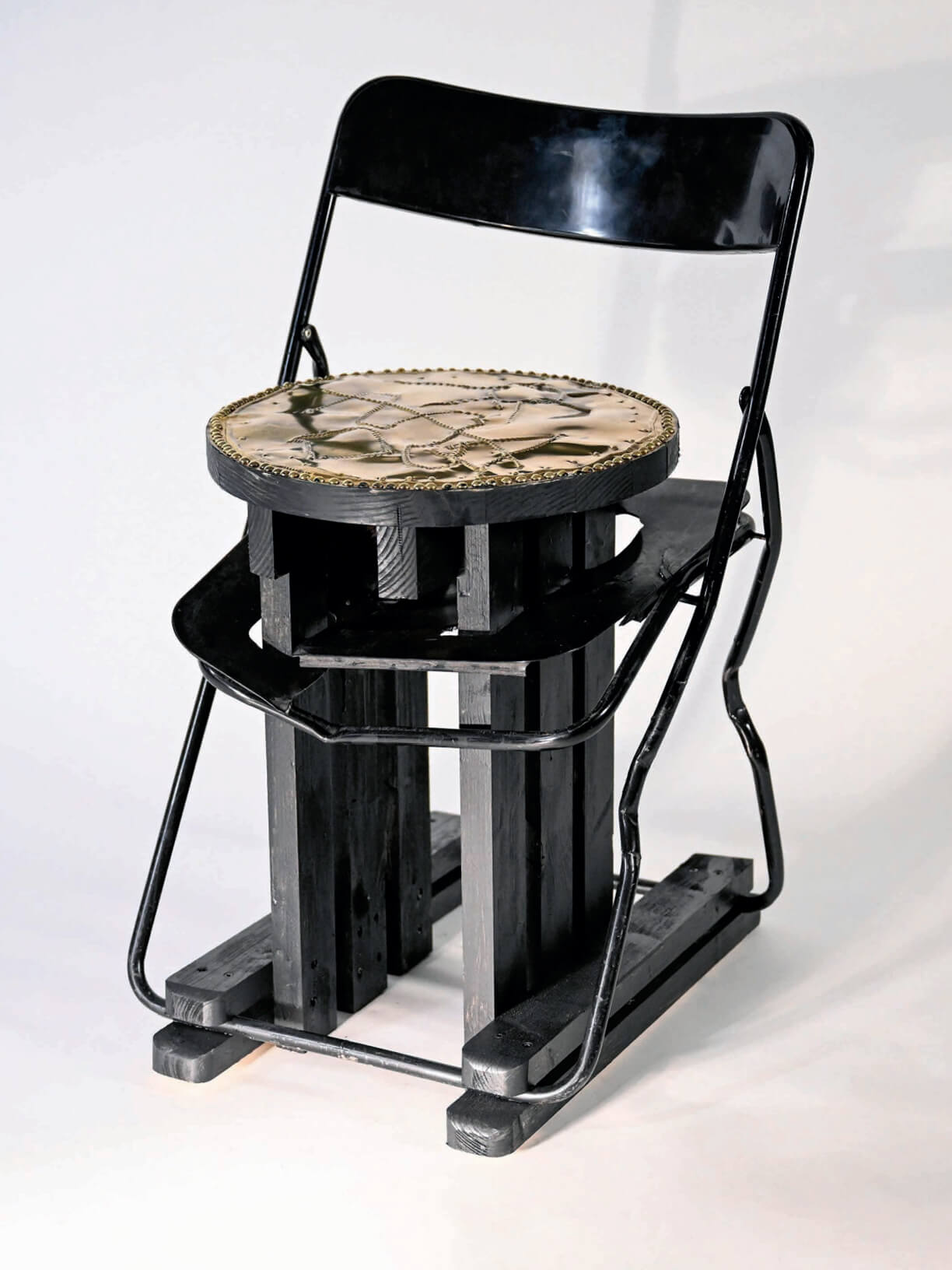
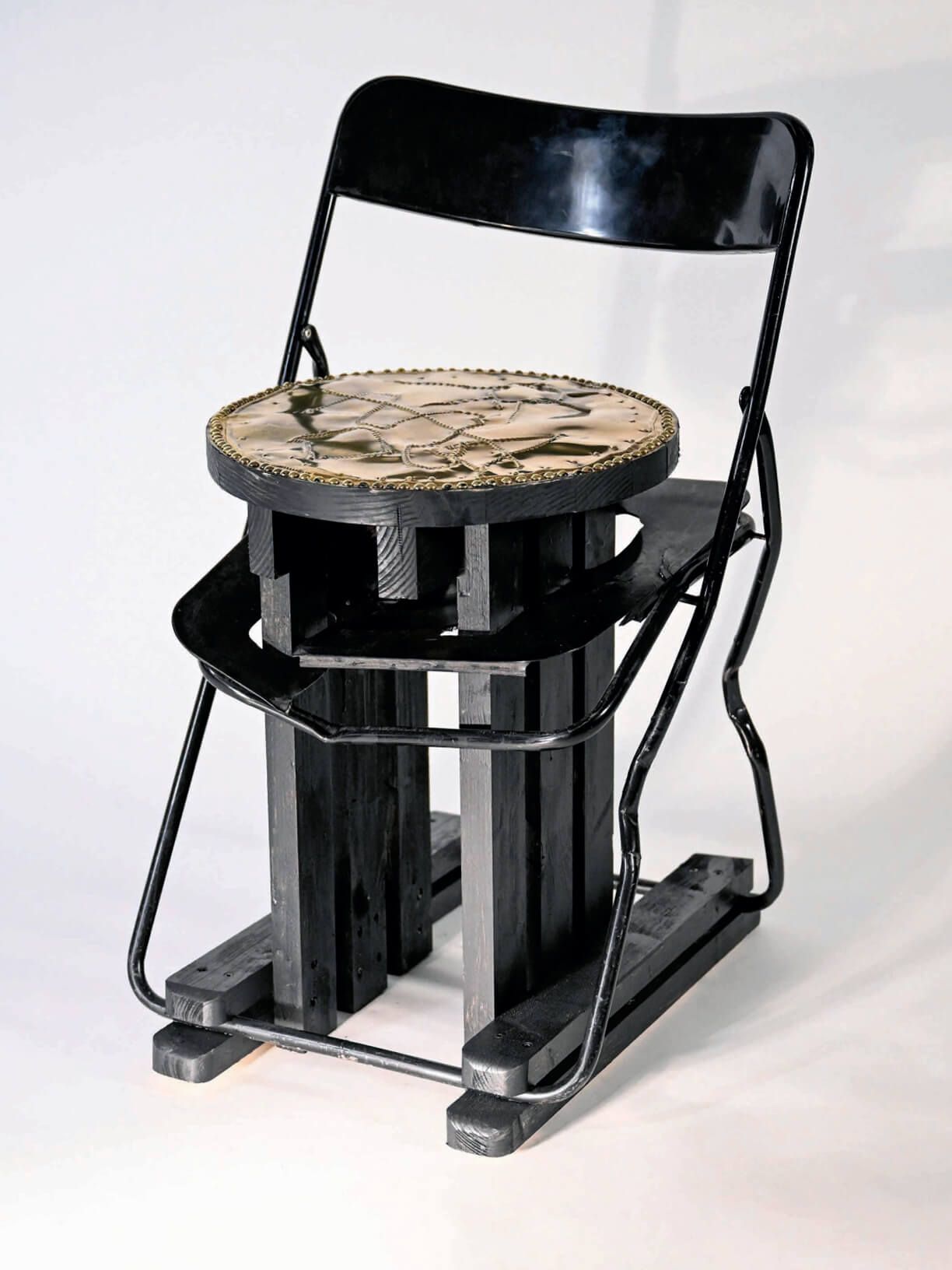
Stefan Inauen, Friends of hopeless chairs No. 6, 2024

Stefan Inauen, Friends of hopeless chairs No. 6, 2024

Different artistic modes of expression coalesce into a multi-layered interior in which everyday objects can be experienced in a new way. Stefan Inauen's Friends of Hopeless Chairs (2024-25) transform everyday objects into sculptural supports in which the painterly is directly intertwined with materiality and colour. With her colour field painting, Claudia Desgranges sets a counterpoint that emphasises the autonomous presence of colour, thus elevating the theme of painting to a conceptual level. Jim Dine’s expressive Amaryllis and Carl August Liner’s poetic plant study, by contrast, anchor the motif within the classical canon of still life. A dialogue thus unfolds between object and image, as well as between abstraction and figuration, in which painting appears as the central medium.

FAVOURITE WORK:

Stefan Inauen, Friends of Hopeless Chairs (2024–25)

SELECTION:

Christian Meier, Artist and Museum & Exhibition Technician, Kunstmuseum / Kunsthalle Appenzell

…selected, "also because:

- they pretend to be insane.

- the delightful thing about these bastards is that they have made themselves comfortable in their discomfort and insecurity.

- they pursue the only viable way of dealing with nostalgia: through destruction.

- they can be tucked only into the very impractical secret compartment between the drawers of art and design – and even there they keep spilling out.

- they might well be possessed – if only by the backsides that sat on them.

- the little gang comes across as very unwashed and yet is so fresh.

- their favourite sport is housing.

- they deserve to be shown without torment.”

Room 11

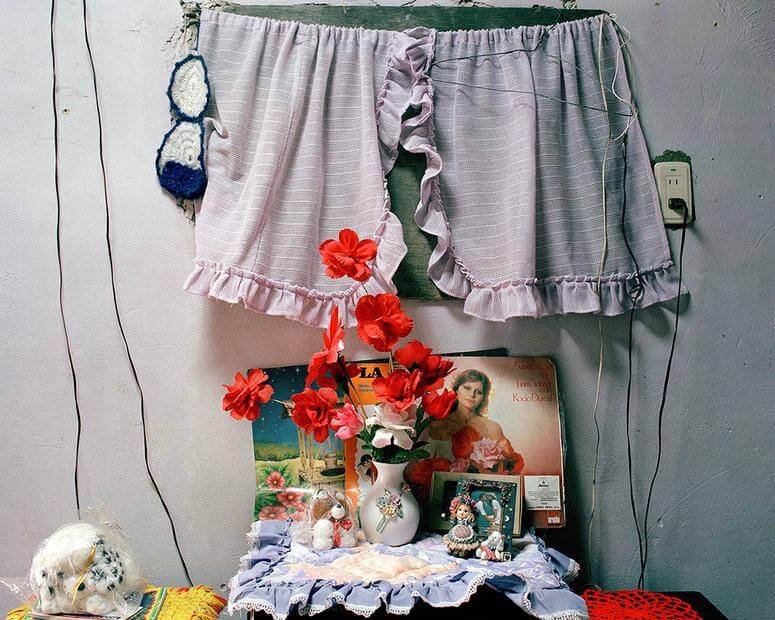
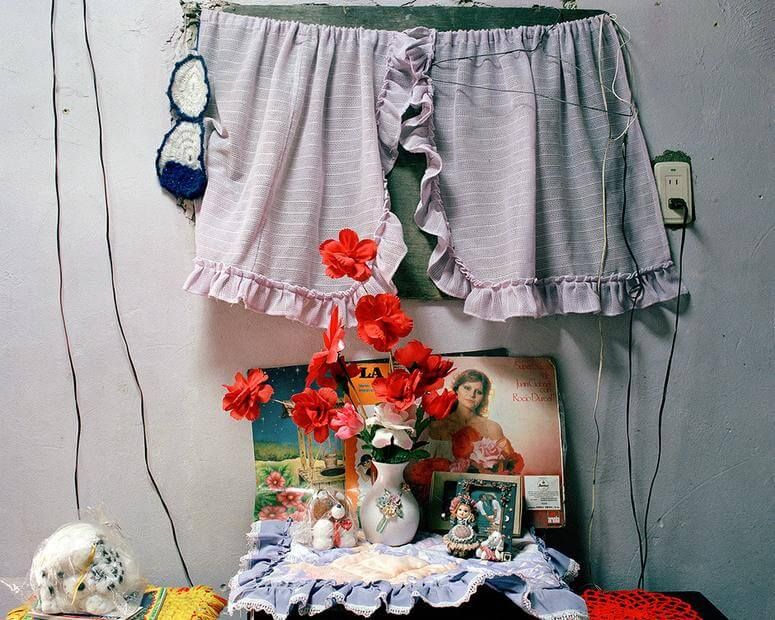
Guadalupe Ruiz, Bogotà D.C., 2002

Guadalupe Ruiz, Bogotà D.C., 2002

In this room, the focus shifts from the painterly interior to a documentary gaze upon the everyday. In Guadalupe Ruiz’s large-scale work Bogotá D.C. (2002), a kaleidoscopic array of domestic interiors unfolds, where images, objects and furniture become a form of social cartography of a city. Beat Zoderer’s reliefs Die alte blaue Rose (The Old Blue Rose, 1984) and Fragment (1986), together with Jim Dine’s lithograph of tools, Untitled (Tools) (1970), expand this context: fragments, patterns and utilitarian objects are brought to the fore as both formal and symbolic elements. In this way, the room continues the theme of the preceding one – the interweaving of art and the everyday – while simultaneously opening it towards questions of social difference, memory and the iconicity of quotidian things.

FAVOURITE WORK:

Guadalupe Ruiz, Bogotá D.C. (2002)

SELECTION:

Luca Tarelli, Exhibition Assistant, Kunstmuseum / Kunsthalle Appenzell

“The tax authority of Bogotá, D.C. divided the city’s residential buildings into six categories. The criteria were based on architectural values: the quality of the roof, the material of the front door, construction costs and the condition of the ground in front of the house. In 2002 Guadalupe Ruiz followed these categories of social differentiation to create a photographic mapping of the Colombian capital. She photographed the interiors of homes – rooms full of pictures. The result is a series of socio-cultural portraits of the Latin American metropolis at the dawn of globalisation in the early twenty-first century. In every room consumer good and image accumulate, bearing witness to a recent postcolonial past: family photographs, reproductions of art-historical and religious paintings in splintering wooden frames, school certificates, motifs printed on curtains, plates, vases and calendars. Drawings and photographs hang layered and densely clustered on the walls. Films, advertisements and news share the screens of the televisions.

The formal equality of the 114 photographs hung side by side does not erase their social difference. From bottom to top, the wealth of the inhabitants gradually diminishes. Yet Ruiz does not show the lives of the people themselves – their bodies are absent from this work – but rather that of the images, which are rhythmised by lived experience. Ruiz appears less concerned with a representation of Colombian life than with the metabolic force of immediate circumstances for images and art. Images, figures, furniture and plants, in their accumulation over time, find a commonality. Processed and transposed into other materials, they continue their existence – close to sleeping and loving bodies, as silent witnesses of social relations and difference.


Why this particular work? In recent years I have slept in many homes – with strangers, with friends, with their families. For a night the room belongs to me, and my dreams to the images on the walls.”

Imprint

CURATOR
Stefanie Gschwend (Direktorin Kunstmuseum / Kunstmuseum Appenzell)

ORGANISATION
Stefanie Gschwend, Regina Brülisauer, Luca Tarelli

EXHIBITION INSTALLATION
Christian Hörler, Christian Meier, Ueli Alder, Raoul Doré, Flavio Hodel, Dominik Hunn, Luca Tarelli

ART EDUCATION
Domenika Chandra

MUSEUM ATTENDANTS
Rita Maria Dobler, Dominique Franke, Margrit Gmünder, Ian Groll, Priska Hüsler, Xiaoping Meier, Barbara Metzger, Heneisha Morris, Yvonne Pola, Madleina Rutishauser, Luca Tarelli, Petra Zinth

EDITOR
Kunstmuseum / Kunsthalle Appenzell

TEXTS
Stefanie Gschwend, Beteiligte Lieblingswerke.

PROOFREADING
Carmen Ebneter, Stefanie Gschwend, Luca Tarelli

TRANSLATION
Stefanie Gschwend

GRAPHIC DESIGN
Data-Orbit / Michel Egger, St.Gallen

ACKNOWLEDGEMENTS
Appenzellerland Tourismus, Asylzentrum AI, Monika Bischofberger, Regina Brülisauer, Guido Buob,
Bücherladen Appenzell, Roland Dähler, Carole Dobler, Hans Dörig, Monica Dörig, Rebekka Dörig Sutter, Alexandra Elias, Alfred Fässler, Sebastian Fässler, Carol Forster, Myriam Gebert, Lucia Genovese, Christian Hörler, Isabella Husistein Schmid, Vanja Hutter, Maria Inauen, Innerrhoder Kunststiftung, Bushra Khalid, Nayab Khalid, Krupa Art Foundation, Toni Kölbener, Angela Koller, Kulturgruppe Appenzell, Agata Ingarden, Birgit Langenegger, Andrea Manser, Simona Martinoli (Fondazione Marguerite Arp, Locarno), Christian Meier, Daniela Mittelholzer, Museum Appenzell, Stefan Müller, Sandra Neff, Martina Obrecht, Neri Pagnan collection, Piktogram, Berthold Pott, Monika Rüegg Bless, Zoe Rusch, Flavia Schmid, Michelle Schoch, Silvio Signer, Jakob Signer, Standeskommission Appenzell Innerrhoden, Martin Lucas Staub, Luca Tarelli, Dr. Kerstin and Wolfgang Van Kerkom, Tanguy Van Quikenborne, Leihgeber*innen, die nicht namentlich genannt werden möchten / lenders who wish to remain anonymous

Lieblingswerke
Collection
Kunstmuseum
Christian Hörler, Stolen an den Stiefeln (3), 2018

Christian Hörler, Stolen an den Stiefeln (3), 2018

Alice Channer, Rockpool, 2022

Alice Channer, Rockpool, 2022

Antoni Tàpies, Pintura blava amb arc de cercle, 1959

Antoni Tàpies, Pintura blava amb arc de cercle, 1959

Hans Arp, Assiette, fourchettes et nombril, 1923

Hans Arp, Assiette, fourchettes et nombril, 1923

Christian Meier, Lochbild, 2012

Christian Meier, Lochbild, 2012

Carl August Liner, Appenzeller Landschaft beim Einnachten, o.J. / undated

Carl August Liner, Appenzeller Landschaft beim Einnachten, o.J. / undated

Ernst Ludwig Kirchner, Ringer in den Bergen (Sertigdörfli), 1926

Ernst Ludwig Kirchner, Ringer in den Bergen (Sertigdörfli), 1926


Carl Walter Liner, Komposition Schwarz / Weiss / Gelb (Eccesia), 1962

Carl Walter Liner, Komposition Schwarz / Weiss / Gelb (Eccesia), 1962

Nesa Gschwend, Living Fabrics 8, 2018

Nesa Gschwend, Living Fabrics 8, 2018

Stefan Inauen, Friends of hopeless chairs No. 6, 2024

Stefan Inauen, Friends of hopeless chairs No. 6, 2024

Guadalupe Ruiz, Bogotà D.C., 2002

Guadalupe Ruiz, Bogotà D.C., 2002

This website uses cookies.

Privacy Policy /